Dynova
Choosing the best artificial intelligence server manufacturer in China requires more than comparing prices or processor specifications. A reliable supplier must understand demanding AI workloads, including model training, inference, computer vision, and large-scale data processing. Its servers should combine powerful GPUs, high-speed networking, efficient storage, and stable thermal management. Small details matter. Cable routing, airflow, firmware updates, and remote monitoring can influence daily performance.
This guide examines how Chinese manufacturers design, assemble, test, and support AI server systems. It considers engineering experience, component traceability, factory quality controls, and practical after-sales service. Buyers should request clear technical documentation, performance test results, warranty terms, and evidence of compliance with applicable standards. A professional manufacturer should also explain configuration limits instead of promising unlimited performance. That honesty matters.
Real deployment conditions can be less predictable than laboratory results. Dust, heat, unstable workloads, and limited data-center space may expose weaknesses quickly. Therefore, this introduction focuses on measurable reliability rather than attractive marketing language. It also recognizes that no supplier is perfect. Even experienced teams can improve documentation, delivery coordination, or support response times. Careful evaluation remains essential. The right partner should communicate clearly, protect customer data, and provide scalable solutions for changing AI requirements. With disciplined verification, transparent communication, and realistic expectations, businesses can identify a capable artificial intelligence server manufacturer for secure and sustainable growth.
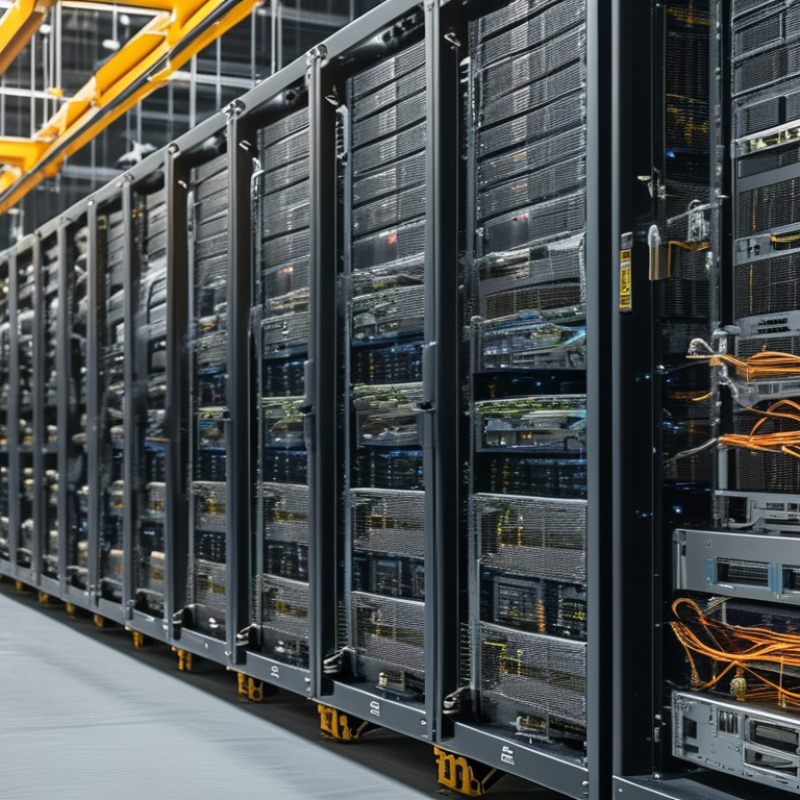
A capable artificial intelligence server manufacturer in China does more than assemble racks and install processors. It designs systems for demanding workloads, including model training, inference, data analysis, and visual computing. An AI server manufacturer is also a technical partner. It selects processors, accelerators, memory, storage, networking, and cooling components as one balanced platform. That work matters. Details decide reliability.
In practical deployments, engineers test servers under sustained workloads, not only during short demonstrations. They monitor temperature, power consumption, fan speed, and processing stability. Manufacturers also adjust configurations for different industries and data center conditions. Clear documentation helps technical teams install and maintain equipment correctly. Support must include troubleshooting, firmware guidance, replacement procedures, and lifecycle planning. Fast replacement matters.
Choosing a manufacturer requires more than comparing processor counts. Buyers should ask for test records, quality controls, security practices, and service response times. Thermal design deserves close attention, especially in dense racks with continuous AI workloads. A cooling plan can still fail when airflow is restricted or room temperatures change. No design is perfect. Experienced manufacturers should explain these limits instead of hiding them. They should also provide scalable options, because a system that fits today’s workload may become inefficient after the next model upgrade. Reliable communication, practical testing, and honest technical advice often reveal more than a polished specification sheet.
Chinese AI server manufacturing now depends on more than installing powerful processors. It requires coordinated advances in accelerator modules, high-speed interconnects, memory architecture, and thermal control. The 2024 Stanford AI Index reports that machine-learning training compute has been doubling roughly every five months. This pressure makes dense computing essential. Chinese manufacturers therefore use advanced air cooling, cold-plate liquid cooling, and modular power systems. Liquid cooling can remove heat closer to the processor, while reducing fan noise and rack energy demand. Still, cooling design is not flawless. Poorly balanced water flow may create hot spots.
Interconnect technology is equally important. AI servers move huge datasets between processors during model training. High-bandwidth networks, optimized switching, and low-latency communication reduce waiting time between calculations. Memory capacity also matters. Large language models can leave processors idle when data arrives too slowly. Engineers often combine high-bandwidth memory with faster storage paths and software scheduling. The 2024 Uptime Institute Global Data Center Survey highlights rising concerns about power availability and operating efficiency. This makes power conversion, rack-level monitoring, and workload management practical core technologies.
Tips: Check cooling performance under sustained workloads, not short demonstrations. Measure power use per completed task. Test network latency across full racks. A useful design can still fail during maintenance, firmware updates, or uneven workloads. Manufacturing teams should document these weaknesses instead of hiding them. Reliable testing records, thermal images, and independent validation strengthen technical credibility.
This chart compares the theoretical one-direction bandwidth of major standards used in AI server design. Higher bandwidth helps accelerate data movement between processors, memory, storage, and network infrastructure. Values are calculated from published interface specifications and do not represent any specific company or brand.
Choosing the Best Artificial Intelligence Server Manufacturer in China requires more than comparing processor counts and memory sizes. A reliable evaluation starts with real workload testing. Ask whether the manufacturer has experience supporting model training, inference, computer vision, and data analytics. Request test results from comparable configurations, not ideal laboratory samples. Short demonstrations can mislead.
Hardware design matters. Check GPU compatibility, CPU balance, memory bandwidth, storage speed, and network capacity. Inspect cooling layouts inside the rack. Poor airflow may create thermal throttling during long training sessions. Power supplies should support stable operation and future expansion. Serviceability matters too. Engineers should replace a failed drive or fan without disrupting the entire cluster.
Documentation reveals professional maturity. Look for clear specifications, firmware records, safety certifications, warranty terms, and response-time commitments. A capable manufacturer should explain performance limits in plain language. Independent testing or audited quality procedures can strengthen credibility. Supply-chain transparency also reduces uncertainty when components become scarce.
Do not trust promises alone. Run a controlled acceptance test. Measure training time, inference latency, power use, noise, and failure recovery. An inexpensive server may become costly through downtime and high electricity consumption. Yet the highest specification is not always the best choice. I have seen teams overbuy accelerators and underinvest in networking. That mistake deserves careful review. Support quality can vary by region, and written commitments matter more than friendly sales conversations.
China’s artificial intelligence server manufacturers now support demanding workloads, from model training to real-time industrial inspection. Leading products typically combine multi-GPU architecture, high-speed networking, redundant power, and efficient cooling. A well-designed chassis should allow technicians to replace storage or fans without dismantling the entire system. Small details matter.
Customization separates a capable supplier from a simple hardware reseller. Buyers can request GPU combinations, memory capacity, rack dimensions, firmware settings, and operating system support. Experienced engineering teams usually begin with workload analysis, thermal testing, and power calculations. They should also provide clear validation records, service procedures, and traceable component information. Independent testing and recognized safety certifications strengthen reliability. Still, no specification sheet reveals every problem. A cooling design may perform well in a laboratory but struggle in a crowded data center. Pilot deployment remains necessary.
Tips: Ask for a sample configuration and thermal report. Check performance under sustained workloads, not short benchmarks. Confirm spare-part availability, remote diagnostics, and response times before signing a contract. Discuss future upgrades early. An overlooked network card can limit an expensive server. Also, request realistic power and noise measurements. Customization sounds impressive, but unnecessary changes may increase maintenance costs. A careful manufacturer will explain both advantages and limitations, even when that makes the proposal less attractive.
Best Artificial Intelligence Server Manufacturer in China
Selecting a reliable Chinese AI server manufacturer requires evidence, not impressive photographs. IDC’s 2024 Worldwide AI and Generative AI Spending Guide projects global AI spending to reach nearly $632 billion by 2028. This growth increases pressure on suppliers, engineers, and service teams. Ask for verified GPU compatibility, power testing, thermal records, and production capacity. A factory should provide serial-level traceability, not only a general quality certificate.
Check how the manufacturer validates performance under continuous workloads. Request independent benchmark results, burn-in procedures, and failure-rate data from comparable deployments. The MLPerf Training and Inference benchmarks offer useful reference points, although laboratory results may not reflect your data center. A practical test should measure throughput, latency, noise, and power consumption in your intended rack environment. Small details matter.
Review service terms before discussing volume pricing. Uptime Institute’s Global Data Center Survey has repeatedly identified power and cooling as major operational concerns, so ask about airflow design, remote monitoring, and replacement-part availability. A reliable supplier should explain its warranty exclusions clearly and provide response-time commitments. Visit the assembly site if possible. A polished tour proves little. Also inspect component storage, inspection records, and technician training. No audit is perfect. My own selection checklist would still leave room for doubt, especially when reported efficiency depends on software settings. Choose the manufacturer willing to disclose limitations, repeat tests, and correct mistakes quickly.
| Evaluation Dimension | Recommended Reference Value | Why It Matters for AI Servers | Evidence to Request from the Manufacturer | Suggested Weight |
|---|---|---|---|---|
| GPU Compatibility | Support for the required accelerator type, quantity, power envelope, and full-speed PCIe connectivity | AI training and inference performance depends on accelerator density, memory, interconnects, and stable power delivery. | Validated configuration sheet, PCIe topology diagram, accelerator qualification list, and thermal test report | 20% |
| PCIe Expansion | PCIe Gen5 x16 provides approximately 63 GB/s theoretical bandwidth per direction | High-bandwidth expansion reduces data-transfer bottlenecks between accelerators, storage, and networking devices. | Motherboard manual, lane-allocation table, and measured bandwidth results using a recognized benchmark | 8% |
| System Memory | ECC memory, sufficient capacity for the workload, and documented memory speed under the selected configuration | ECC helps detect and correct common single-bit memory errors that may otherwise interrupt long AI jobs. | Memory compatibility list, ECC validation records, BIOS settings, and system stress-test results | 8% |
| Power Delivery | Redundant hot-swappable power supplies with adequate continuous output and appropriate input voltage | AI servers can operate at high sustained power levels; redundant supplies reduce downtime caused by a single PSU failure. | Power-budget calculation, PSU efficiency documentation, redundancy test, and input-voltage requirements | 10% |
| Thermal Design | Documented operation at the customer’s ambient temperature, rack layout, and workload power level | Stable temperatures help prevent thermal throttling, unexpected shutdowns, and shortened component life. | Airflow diagram, inlet-temperature test, fan-control policy, acoustic data, and optional liquid-cooling specifications | 12% |
| Networking | Network speed and topology matched to the workload; 400 Gb/s Ethernet equals 50 GB/s theoretical line rate | Distributed training and large-scale inference require low-latency, high-throughput communication between nodes. | Network adapter specifications, switch compatibility, topology diagram, latency results, and throughput tests | 10% |
| Storage Performance | NVMe storage, sufficient endurance for the workload, and a design that supports serviceable drives where required | Fast local storage improves dataset loading, checkpointing, container deployment, and recovery time. | Drive qualification list, sequential and random I/O results, endurance ratings, RAID or software-defined storage details | 7% |
| Reliability and Availability | Target service availability should be contractually defined; 99.9% availability allows about 8 hours 46 minutes of downtime per year | Clear availability targets make operational risk measurable and support realistic service-level agreements. | Failure-rate history, burn-in procedure, service-level agreement, spare-parts plan, and incident-response process | 10% |
| Remote Management | Out-of-band management with hardware monitoring, remote console, firmware control, event logs, and alerting | Remote diagnostics reduce on-site intervention and shorten troubleshooting time in data centers. | Management interface demonstration, API documentation, alert examples, security controls, and firmware-update process | 5% |
| Compliance and Traceability | Applicable electrical-safety, electromagnetic-compatibility, environmental, and import requirements documented for the destination market | Proper documentation reduces customs, installation, safety, and procurement risks. | Test reports, declarations, serial-number traceability, quality-management records, and country-specific documentation | 5% |
| Delivery and After-Sales Support | Written lead time, warranty terms, replacement-part availability, remote support hours, and escalation contacts | A technically strong server can still create operational risk if support and replacement procedures are unclear. | Sample warranty, support workflow, service-center coverage, spare-parts inventory policy, and customer-reference process | 5% |
| Total Evaluation Weight | 100% | |||
Note: Reference values are technical selection guidelines. Final requirements should be confirmed through workload testing, configuration validation, and a written service agreement.
Test real workloads, including training, inference, computer vision, and data analytics. Short demonstrations mislead. Request results from comparable configurations.
Check GPU compatibility, CPU balance, memory bandwidth, storage speed, and network capacity. Inspect airflow inside the rack. Poor cooling causes throttling.
Run a controlled acceptance test under sustained workloads. Measure training time, inference latency, power use, noise, and failure recovery.
Long training sessions generate continuous heat. Stable power supplies support expansion and reduce unexpected interruptions. Crowded racks can expose weak cooling designs.
Buyers may request GPU combinations, memory capacity, rack dimensions, firmware settings, and operating system support. Every change needs thermal and power validation.
Ask for specifications, firmware records, safety certifications, warranty exclusions, and response-time commitments. Component traceability adds useful confidence. Paperwork matters.
Confirm spare-part availability, remote diagnostics, technician coverage, and replacement procedures. Engineers should replace a fan or drive without stopping the cluster.
Do not overbuy accelerators while underinvesting in networking. Avoid trusting laboratory benchmarks alone. My checklist could still miss software-related efficiency problems. That deserves review.
An artificial intelligence server manufacturer plays a vital role in designing and producing high-performance computing systems for machine learning, data analysis, cloud services, and other demanding workloads. In China, these manufacturers typically integrate advanced processors, graphics accelerators, high-speed memory, efficient storage, rapid networking, and intelligent cooling technologies to deliver reliable and scalable platforms. Their work also includes system integration, software compatibility, quality control, and technical support.
When evaluating the best AI server manufacturer, buyers should consider computing performance, energy efficiency, product stability, supply chain capability, certifications, delivery capacity, and after-sales service. Leading manufacturers may offer rack servers, accelerator-based systems, edge solutions, and customized configurations tailored to different industries and deployment environments. A reliable selection process should begin with a clear assessment of workload requirements, expansion plans, budget, technical support, and security expectations. Comparing testing results, customization options, warranty policies, and communication efficiency can help organizations choose a dependable long-term manufacturing partner.