Dynova Dynova

2026 Best AI Server Manufacturing Companies?

Time:2026-10-10 Author:Charlotte
0%

As AI workloads expand in 2026, server manufacturers face a demanding test. Training clusters need dense computing, fast networking, reliable cooling, and disciplined power management. A strong ai server manufacturing company must connect these elements without sacrificing serviceability.

This guide examines companies through practical manufacturing evidence, not promotional language. It considers GPU compatibility, rack-scale design, thermal testing, quality controls, supply-chain resilience, and technical support. Factory automation matters, but so do human inspections, firmware updates, and replacement procedures. A server may perform well in a laboratory, yet struggle in a crowded data center. That gap deserves attention.

No ranking is flawless. Public specifications can hide delivery limits, regional support differences, or maintenance costs. Some performance figures also depend on software settings and workload design. Readers should verify certifications, warranty terms, independent benchmarks, and customer references before making decisions. Look closely.

The companies discussed here represent different strengths. One may offer efficient liquid-cooled systems, while another provides flexible configurations for enterprise facilities. A third may excel in large-scale integration but lack transparent pricing. These differences are important for procurement teams, data-center operators, and technology investors.

The goal is not to declare one universal winner. It is to identify manufacturers with credible engineering practices and measurable operational value. Real experience often reveals details that brochures omit, including cable access, noise levels, service delays, and spare-part availability. Those details can determine whether an AI deployment remains productive after installation.
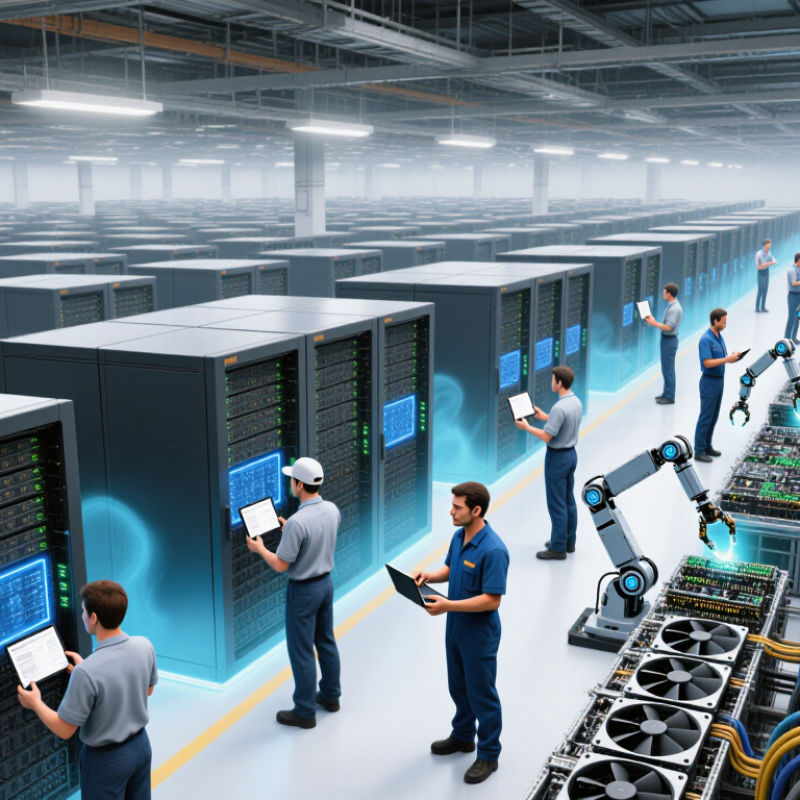
2026 Best AI Server Manufacturing Companies?

Definition and Role of AI Server Manufacturing Companies

AI server manufacturing companies design, assemble, and validate computing systems built for artificial intelligence workloads. Their work extends beyond placing processors inside a metal chassis. They engineer high-speed interconnects, memory layouts, power delivery, cooling systems, and management software. These components must operate together under sustained, demanding workloads.

Their role begins with translating data center requirements into a practical server design. A manufacturing team may test airflow across a packed rack, measure heat near accelerator cards, and inspect cable paths during maintenance. It also performs burn-in tests, firmware validation, electrical safety checks, and performance benchmarking. Reliable companies document these procedures and provide traceable quality records. They also support installation, replacement parts, security updates, and equipment recycling throughout the system’s lifecycle.

Performance alone is not enough. A server that produces impressive laboratory results may become inefficient in a crowded facility. Power limits, room temperature, noise, service access, and network compatibility can change the outcome. No factory gets every design right. Small assumptions can still create expensive delays. Buyers should compare independently verified benchmarks, warranty terms, delivery capability, and technical support response times. They should also ask how failures are reported and corrected. Honest manufacturers explain limitations instead of promising unlimited scalability. That transparency helps organizations choose systems that remain manageable after deployment, when real workloads expose weaknesses that demonstrations often hide.

2026 Best AI Server Manufacturing Companies? — Definition and Role of AI Server Manufacturing Companies

AI server manufacturing companies design, assemble, integrate, test, and support computing systems optimized for artificial intelligence workloads. The chart shows the core role coverage of this industry, where each point represents one essential manufacturing responsibility.

Role coverage index: 1 = a fundamental responsibility of AI server manufacturing; 0 = not a direct manufacturing responsibility. These roles apply broadly across the industry and do not represent any individual company or brand.

Core Technologies Used in AI Server Production

2026 Best AI Server Manufacturing Companies: Core Technologies Used in AI Server Production

AI server production now depends on more than powerful processors. Manufacturers combine accelerator chips, high-bandwidth memory, and fast interconnects to reduce training delays. A well-designed server can move data between processors without creating a communication bottleneck. PCIe and CXL technologies also improve device expansion and memory sharing. These features matter when models grow beyond one machine.

Thermal engineering is equally important. Dense racks generate intense heat, so many factories use direct-to-chip liquid cooling, cold plates, and carefully designed coolant paths. Air cooling still works for smaller systems, but it may become inefficient at higher power levels. Power delivery requires stable voltage regulation, redundant supplies, and efficient conversion circuits. Manufacturing teams should test vibration, temperature changes, firmware stability, and continuous workloads before shipment. They also inspect cable routing by hand.

Reliability depends on repeatable production. Automated optical inspection can detect poor solder joints, while burn-in testing exposes early component failures. Secure firmware, controlled component sourcing, and traceable serial records strengthen supply-chain trust. In my experience, thermal performance often looks excellent in laboratory tests but changes inside a crowded rack. That gap deserves more attention. Small details matter. Even airflow direction can affect maintenance time and operating costs. Manufacturers still need better methods for comparing real-world efficiency, especially when workloads change throughout the day.

Key Evaluation Criteria for AI Server Manufacturers in 2026

In 2026, evaluating an AI server manufacturer requires more than comparing accelerator speed. Buyers should examine sustained performance, power density, cooling design, and service response. The International Energy Agency reports that data centers consumed about 460 terawatt-hours globally in 2022. It expects demand to exceed 1,000 terawatt-hours by 2026. Energy efficiency is now a procurement requirement.

Look beyond peak benchmark scores. Request measured performance per watt during long training and inference workloads. Ask for rack-level thermal data, fan curves, liquid-cooling compatibility, and failure-recovery procedures. Uptime Institute’s 2024 Global Data Center Survey reported an average power usage effectiveness of approximately 1.56. Manufacturers should explain how their systems perform in real facilities, not only controlled laboratories. Small details matter, including tool-free component access and clear cable routing.

Reliability evidence should include independent testing, component traceability, firmware governance, and documented security updates. The manufacturer should provide realistic lead times and spare-part coverage. I would not trust vague claims about “enterprise-grade” durability. A lower benchmark score may still be acceptable when uptime, electricity costs, and maintenance are better. This requires reflection. Procurement teams often reward visible speed while underestimating cooling failures, technician access, and three-year operating costs.

2026 Best AI Server Manufacturing Companies? - Key Evaluation Criteria for AI Server Manufacturers in 2026

A standards-based evaluation framework for comparing AI server manufacturers without relying on company or brand names.

Evaluation Dimension What to Evaluate Verifiable Technical and Manufacturing Indicators Recommended Evidence Weight
Accelerator Compatibility Ability to support current and next-generation accelerator architectures without major chassis redesign. Documented support for multi-accelerator configurations, PCI Express 5.0 or newer expansion, accelerator peer-to-peer communication, and validated thermal profiles at sustained workload levels. System qualification matrix, platform layout drawings, firmware compatibility list, and independent workload test results. 18%
CPU, Memory, and CXL Readiness Balanced host-side performance for data preparation, orchestration, inference, and memory-intensive workloads. Support for high-core-count server processors, high-capacity DDR5 memory, error-correcting code memory, memory sparing, and CXL-based expansion where applicable. Supported processor list, maximum memory configuration, memory RAS documentation, and CXL interoperability records. 10%
High-Speed Networking Efficient scaling across nodes for distributed training and large-scale inference. Support for 200, 400, or 800 Gb/s fabric options, redundant network paths, RDMA capability, low-latency switching, and congestion-management features. Network adapter qualification data, topology diagrams, latency results, and all-reduce or distributed-training benchmarks. 12%
Power Delivery and Efficiency Stable power delivery under highly variable accelerator loads and acceptable operating cost at data-center scale. Redundant hot-swappable power supplies, 80 PLUS Titanium or equivalent efficiency documentation, power telemetry, configurable power capping, and support for facility voltage requirements. Power-supply test reports, efficiency curves, rack power budgets, telemetry screenshots, and measured performance-per-watt results. 12%
Thermal Management Ability to maintain component performance and reliability at high sustained utilization. Validated airflow design, front-to-rear cooling, fan redundancy, hot-aisle and cold-aisle compatibility, and direct-liquid or rear-door heat-exchanger options for high-density deployments. Thermal test reports, inlet-temperature operating range, liquid-cooling specifications, acoustic data, and throttling analysis. 12%
Reliability and Serviceability Reduction of unplanned downtime and rapid replacement of failed components. Hot-swappable storage, fans, power supplies, and selected accelerator or networking modules; predictive monitoring; component-level diagnostics; and documented mean-time-to-repair procedures. Failure-mode analysis, service manuals, diagnostic workflows, spare-parts policy, and field-replacement records. 10%
Firmware and Platform Security Protection against unauthorized firmware changes, supply-chain attacks, and management-plane compromise. Secure boot, signed firmware, hardware root of trust, measured boot, role-based management access, security event logging, vulnerability-response procedures, and update rollback controls. Security architecture documentation, vulnerability disclosure policy, firmware signing process, penetration-test summary, and lifecycle support policy. 10%
Manufacturing Quality Consistency of production, traceability, and control of hardware variation across batches. ISO 9001-based quality management, automated optical inspection, burn-in testing, system-level validation, serial-number traceability, and documented corrective-action procedures. Current certification records, factory audit results, inspection coverage, burn-in methodology, and nonconformance reports. 8%
Software and Management Integration Ease of deployment, monitoring, automation, and integration with data-center operations. Redfish-based management, RESTful APIs, out-of-band monitoring, remote console access, firmware orchestration, telemetry export, and integration with cluster-management platforms. API documentation, management-controller feature list, automation examples, monitoring integrations, and deployment runbooks. 7%
Supply-Chain Resilience Ability to maintain delivery schedules and provide replacement parts throughout the product lifecycle. Multiple qualified suppliers for critical components, component lifecycle notifications, regional repair capacity, spare-parts availability, and documented alternative-component validation. Lifecycle policy, lead-time records, supplier qualification process, regional service coverage, and last-time-buy procedures. 6%
Compliance and Sustainability Conformance with applicable safety, electromagnetic, environmental, and energy requirements. Relevant CE, FCC, UL or IEC safety documentation; RoHS and REACH declarations where applicable; material disclosures; repairability information; and measured energy-use data. Declaration of conformity, safety test reports, environmental certificates, product carbon data, and recycling instructions. 5%

Scoring method: Score each dimension from 0 to 5 using documented evidence, multiply by the listed weight, and prioritize measured production results over marketing claims.

Leading AI Server Manufacturing Companies by Market Segment

2026 Best AI Server Manufacturing Companies

The leading AI server manufacturing companies in 2026 will compete across distinct market segments. General-purpose enterprise servers support analytics, private cloud platforms, and internal machine learning workloads. These systems usually prioritize balanced compute, memory capacity, serviceability, and predictable operating costs.

Specialized AI infrastructure serves model training, scientific research, and large-scale inference. Manufacturers in this segment emphasize accelerator density, high-speed interconnects, liquid cooling, and advanced power management. Edge-focused suppliers build compact systems for factories, hospitals, transport networks, and remote sites. Their products need low latency, rugged construction, and simple maintenance. Hyperscale-oriented manufacturers often deliver customized racks, modular power systems, and rapid deployment. However, performance claims can look impressive while hiding installation delays or difficult upgrades. Buyers should test real workloads, not only review laboratory benchmarks.

Tips: Match the server to the workload first. Check cooling capacity, rack depth, firmware support, warranty response, and five-year energy costs. Ask for measured performance under sustained load. Also inspect component availability. A fast server becomes a weak investment when replacement parts arrive slowly. Manufacturers with clear documentation and traceable testing usually deserve greater trust, even when their headline specifications appear less exciting. This market changes quickly, and no segment remains ideal for every buyer.

Future Trends Shaping the AI Server Manufacturing Industry

2026 Best AI Server Manufacturing Companies?

Future Trends Shaping the AI Server Manufacturing Industry

AI server manufacturing is moving beyond faster processors and larger clusters. In 2026, leading manufacturers will design systems around workload efficiency, heat control, and serviceability. During deployment reviews, engineers often examine rack density, power usage, cooling performance, and replacement time. These details matter more than impressive specification sheets.

Liquid cooling will become increasingly common as accelerator power levels rise. Modular server designs may also simplify upgrades when new processors or memory standards appear. Manufacturers are investing in digital twins to test airflow, thermal loads, and maintenance procedures before production. That reduces costly surprises. However, digital models still depend on accurate factory data and realistic operating conditions.

Supply chain visibility will shape purchasing decisions. Buyers will expect traceable components, consistent testing, and clear lifecycle support. Energy-efficient power systems and recyclable materials may influence contracts as data centers face stricter sustainability expectations. Security will also reach deeper into firmware, manufacturing records, and remote management tools. A practical evaluation should include independent performance testing, failure-rate evidence, and technician feedback. Not every forecast will prove correct. Some liquid cooling projects may create maintenance burdens when training is weak. The strongest manufacturers will learn from those failures, revise designs, and explain limitations honestly.

FAQS

What core technologies are used in AI server production?

AI servers combine accelerator chips, high-bandwidth memory, and fast interconnects. These parts move data quickly between processors. PCIe and CXL support expansion and shared memory. The design matters when workloads exceed one machine.

Why is cooling important in dense AI servers?

Dense racks produce intense heat. Direct-to-chip liquid cooling uses cold plates and controlled coolant paths. Air cooling may suit smaller systems. It can become inefficient at higher power levels. Rack conditions can differ from laboratory results.

How should buyers evaluate AI server performance?

Do not rely only on peak benchmark scores. Request sustained performance during long training and inference workloads. Measure performance per watt. Ask for rack-level thermal data and fan curves. A slower server may cost less over time.

What power features should an AI server include?

Stable voltage regulation protects sensitive components. Redundant power supplies improve resilience. Efficient conversion circuits reduce wasted electricity. Buyers should inspect power density and long-term energy costs. Electricity can become the largest hidden expense.

Which reliability tests should manufacturers complete?

Testing should include vibration, temperature changes, firmware stability, and continuous workloads. Burn-in testing can reveal early component failures. Automated optical inspection checks solder joints. Teams should also inspect cable routing by hand. Small errors matter.

What evidence should manufacturers provide?

Request component traceability, independent testing, and documented security updates. Firmware governance should be clearly explained. Ask for realistic delivery times and spare-part coverage. Vague durability claims are not enough. I would remain cautious.

How do AI server needs differ by market segment?

Enterprise systems usually balance computing power, memory, serviceability, and operating costs. Specialized systems prioritize accelerator density and liquid cooling. Edge systems need compact designs, rugged construction, and low latency. Hyperscale systems often use customized racks and modular power.

What practical details should buyers inspect before purchasing?

Match the server to the actual workload. Check cooling capacity, rack depth, firmware support, and warranty response. Inspect cable access and component availability. Test real workloads, not only laboratory demonstrations. A fast server becomes disappointing when repairs take weeks.

Conclusion

AI server manufacturing companies design, assemble, and validate high-performance computing systems built to support artificial intelligence workloads. An ai server manufacturing company typically integrates advanced processors, accelerators, high-speed memory, efficient storage, networking components, thermal management, and power systems into reliable platforms for training, inference, and data-intensive applications. In 2026, manufacturers should be evaluated by computing performance, energy efficiency, scalability, system reliability, supply-chain resilience, customization capabilities, security, and long-term technical support.

The leading companies in this field serve different market segments, including enterprise data centers, cloud infrastructure providers, research institutions, and specialized edge-computing environments. Future industry development will be shaped by increasingly efficient hardware, liquid and intelligent cooling, modular architectures, automated system management, stronger interoperability, and more sustainable production methods. As AI demand continues to expand, manufacturers that balance performance, operating cost, flexibility, and responsible engineering will be best positioned to support the next generation of intelligent computing infrastructure.

Charlotte

Charlotte

Charlotte is a seasoned marketing professional with a deep understanding of the company's portfolio and a passion for elevating its presence in the market. With a keen eye for detail and a commitment to excellence, she ensures that our professional blog is regularly updated with insightful articles......