Dynova
Choosing the best China AI server system integrator is not simply a matter of comparing prices or listing GPU models. The right partner must connect hardware, networking, storage, cooling, software, and long-term support into one dependable platform. A server may look powerful on paper, yet perform poorly when airflow is restricted or data pipelines are badly configured.
The answer is conditional. Different workloads require different designs. A research laboratory may need dense GPU nodes, rapid interconnects, and flexible scheduling. A financial company may prioritize security controls, predictable latency, and detailed compliance records. An enterprise deployment may depend more on remote monitoring, spare-parts availability, and engineers who can respond quickly when a rack overheats.
This guide examines how leading Chinese integrators approach these practical demands. It considers component quality, system validation, deployment experience, technical certifications, delivery capability, and after-sales service. Site testing matters. So does documentation. A credible provider should explain thermal limits, power requirements, warranty coverage, firmware updates, and integration risks without hiding behind impressive specifications.
Experience should be visible in evidence, not only in marketing claims. Ask for reference projects, acceptance-test procedures, and measurable performance results. Check whether the integrator understands your software stack, including CUDA libraries, container platforms, orchestration tools, and monitoring systems. Proof matters more.
No single company is automatically best for every buyer. Some vendors offer excellent customization but weaker global support. Others provide reliable service but limited architectural flexibility. That gap matters. A careful evaluation should balance technical depth, commercial transparency, security, and the provider’s ability to remain accountable after installation.
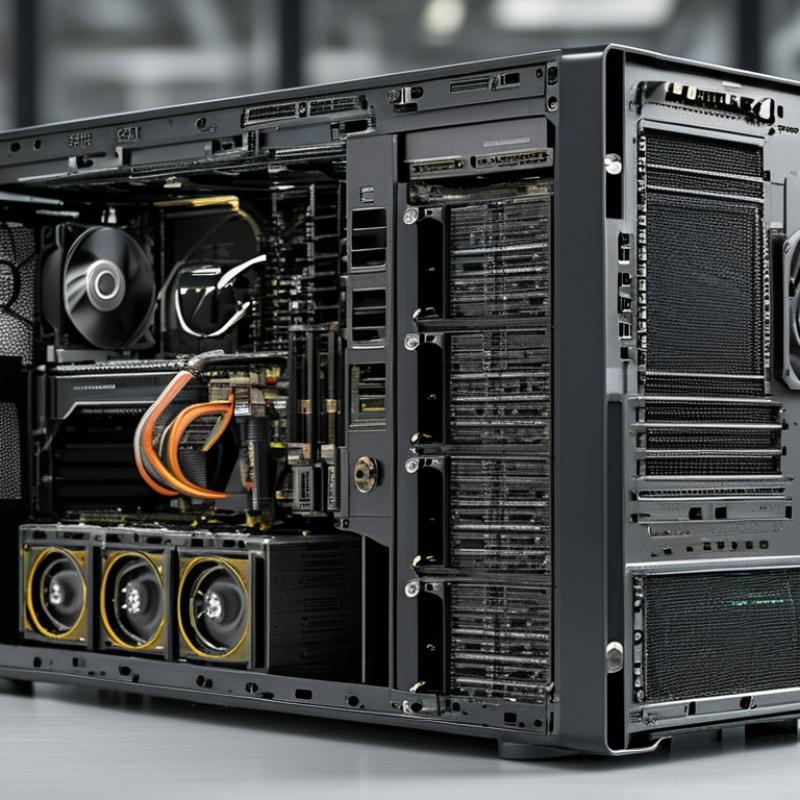
A China AI server system integrator is a technical partner that designs, supplies, installs, and supports complete AI computing environments in China. It connects servers, accelerators, storage, networking, cooling, and software into one working system. The integrator also checks power capacity, rack space, operating temperatures, and data security requirements. This role is more complex than selling hardware. It requires practical engineering experience and careful coordination between suppliers, facility teams, and software specialists.
A reliable integrator should provide clear system diagrams, realistic performance estimates, and documented testing procedures. Ask how it handles driver updates, failed components, airflow problems, and remote monitoring. On-site experience matters. A useful partner can explain why a system may slow down when memory traffic increases or when cooling becomes uneven. Still, no proposal is perfect. Some performance forecasts depend on workload data that customers have not measured yet.
Tips: Request a small pilot installation before full deployment. Test training speed, power use, noise, and recovery time. Keep written records of every configuration change. Confirm service response times and spare-part procedures before signing. Do not judge an integrator by server specifications alone. Its maintenance process often determines the system’s real value.
An AI server system integrator designs, supplies, and supports the infrastructure behind demanding artificial intelligence workloads. The work starts with workload analysis. Engineers review model size, training methods, storage needs, and expected user traffic. They then select suitable processors, accelerators, memory, networking, and cooling systems. Fit matters more than impressive specifications.
Core services include architecture design, hardware integration, cluster deployment, and software configuration. Specialists install operating systems, drivers, container platforms, and resource schedulers. They also connect high-speed storage and network fabrics for faster data movement. Careful cable labeling and airflow planning prevent avoidable maintenance problems. Small details matter.
Reliable integrators provide testing before production use. They measure compute performance, power consumption, thermal behavior, and failure recovery. Monitoring tools can track temperature, utilization, and system errors in real time. Security services may include access controls, update management, and audit records. Support teams handle diagnostics, spare parts, and remote assistance. However, no deployment is perfect. Early estimates can miss data growth or cooling limitations. An experienced provider reviews those gaps honestly and adjusts the design. Customers should request clear service levels, documented test results, and practical maintenance procedures. Fancy promises are not enough.
| Core Service | Scope of Work | Typical Deliverables | Key Evaluation Metrics | Relevant Technical Practices |
|---|---|---|---|---|
| AI Workload Assessment | Analyzes model size, training or inference requirements, data volume, concurrency, latency targets, and expected growth. | Workload profile, capacity plan, hardware sizing, power and cooling estimates, and deployment roadmap. | Fit to workload Capacity headroom Cost-per-performance |
Benchmarking with representative models, datasets, batch sizes, and sequence lengths. |
| AI Server Architecture Design | Designs the compute, memory, accelerator, storage, networking, rack, and power architecture for the target environment. | System architecture diagram, bill of materials, compatibility matrix, rack layout, and redundancy plan. | Scalability Component compatibility Availability design |
Balanced CPU, accelerator, memory, PCIe connectivity, network bandwidth, and storage throughput. |
| GPU and Accelerator Integration | Installs and validates accelerator hardware, driver stacks, firmware, runtime libraries, and multi-device communication. | Configured accelerator nodes, driver validation report, topology map, and performance test results. | Accelerator utilization Memory efficiency Inter-device bandwidth |
Validated drivers, collective communication tests, thermal checks, and error monitoring. |
| High-Speed Networking | Builds the low-latency network fabric required for distributed training, large-scale inference, and shared storage access. | Network topology, switch configuration, cabling plan, traffic segmentation, and throughput test report. | Bandwidth Latency Packet-loss rate Congestion control |
Redundant links, subnet planning, quality-of-service policies, and tested collective communication paths. |
| Storage and Data Pipeline Integration | Connects local, shared, and object-based storage with data ingestion, checkpointing, dataset access, and backup workflows. | Storage architecture, mount configuration, data-flow design, backup policy, and recovery procedures. | Read/write throughput Input-output operations Checkpoint recovery time |
Tiered storage, parallel file access, data integrity checks, and capacity monitoring. |
| Cluster and Orchestration Deployment | Deploys the operating system, container environment, scheduler, resource quotas, and multi-node job management. | Cluster configuration, user and quota policies, job templates, container images, and operating procedures. | Job scheduling efficiency Resource utilization Cluster availability |
Containerized workloads, role-based access, isolated environments, and reproducible deployment files. |
| AI Software Stack Optimization | Optimizes frameworks, numerical libraries, inference engines, compilers, kernels, and model-serving configurations. | Software compatibility report, optimized runtime, model conversion workflow, and performance comparison. | Tokens per second Training time Inference latency Accuracy retention |
Controlled A/B tests using identical models, datasets, precision settings, and workload conditions. |
| Power and Thermal Management | Plans rack power distribution, thermal capacity, airflow, cooling requirements, and safe operating limits. | Power budget, thermal assessment, rack placement plan, sensor configuration, and environmental alarms. | Power usage Temperature stability Thermal throttling events |
Redundant power paths, adequate rack capacity, airflow management, and continuous temperature monitoring. |
| Security and Compliance Configuration | Protects infrastructure, credentials, model files, datasets, interfaces, and administrative access. | Security baseline, access-control policy, network segmentation, audit configuration, and incident procedures. | Patch compliance Access-control coverage Audit traceability |
Least-privilege access, encryption in transit and at rest, secure boot practices, and centralized logging. |
| Testing and Acceptance | Validates hardware stability, software compatibility, network performance, storage performance, and application behavior before handover. | Acceptance test plan, stress-test results, issue register, remediation report, and sign-off documentation. | Pass rate Mean time between failures Performance variance |
Burn-in testing, fault simulation, repeatable benchmarks, and documented acceptance criteria. |
| Monitoring and Operations | Provides ongoing visibility into hardware health, resource utilization, job status, capacity, energy use, and security events. | Dashboards, alert rules, log collection, capacity reports, maintenance calendar, and operational runbooks. | Mean time to detect Mean time to repair Alert accuracy |
Centralized metrics, logs and events, threshold-based alerts, trend analysis, and automated diagnostics. |
| Technical Support and Lifecycle Services | Maintains the integrated environment through troubleshooting, spare-parts planning, upgrades, migration, and retirement. | Support process, escalation matrix, spare-parts plan, upgrade schedule, knowledge base, and lifecycle report. | Response time Resolution time Planned uptime Upgrade success rate |
Documented service levels, change control, tested rollback plans, and preventive maintenance. |
China’s AI server ecosystem is built around dense computing, fast networking, and disciplined system integration. The best integrator is not simply the company offering the largest machine. It is the team that matches hardware, software, cooling, and support to a real workload.
Accelerator selection depends on model size, precision, memory bandwidth, and inference latency. High-bandwidth memory keeps large models moving, while PCIe and high-speed fabric reduce communication delays between nodes. In a training cluster, topology matters. A poorly arranged network can leave expensive processors waiting.
Power and thermal design deserve equal attention. Liquid cooling can control heat in tightly packed racks, but it requires leak monitoring, maintenance skills, and facility planning. Air cooling remains practical for smaller deployments. The choice is rarely absolute.
Storage is another quiet performance factor. Distributed systems need fast data paths, reliable redundancy, and clear recovery procedures. A server that computes quickly but loads data slowly is still inefficient. Monitoring tools should track temperature, utilization, network errors, and job interruptions in real time.
Field experience often reveals uncomfortable gaps. Firmware versions may conflict. Drivers can behave differently under sustained workloads. Documentation may also be incomplete. Acceptance tests should use representative datasets, repeatable benchmarks, and recorded power measurements. Security controls, access management, and audit logs must be designed before deployment, not after an incident.
What Is the Best China AI Server System Integrator?
How to Evaluate the Best AI Server System Integrator
The best AI server system integrator is not chosen by hardware specifications alone. Evaluation should begin with practical experience in similar deployments. Ask for project evidence involving model training, inference, storage, and high-speed networking. Reliable integrators can explain rack density, power limits, cooling design, and maintenance procedures in clear terms.
Request a detailed architecture document. It should show accelerator compatibility, CPU balance, memory capacity, network throughput, and storage performance. Check whether the design supports future expansion without replacing the entire rack. A controlled pilot is useful. Measure training time, system temperature, job failure rates, and power consumption under sustained workloads. Numbers matter more than confident presentations.
Look closely at technical support. Ask about response times, spare parts, firmware control, remote diagnosis, and on-site engineering coverage. Confirm that security policies protect system access and customer data. Independent references can reveal weaknesses that sales materials hide. No checklist is perfect. I would still question unusually low pricing, vague warranty terms, and promises of unlimited performance. A strong partner admits design limits and records every change during deployment. Small details often decide whether an AI cluster remains stable after months of heavy use.
What Is the Best China AI Server System Integrator?
Steps for Selecting the Right Integration Partner
Selecting the right China AI server system integrator starts with defining your workload. Identify model size, training frequency, inference demand, storage needs, and expected growth. A partner should translate these requirements into practical rack designs, network layouts, and cooling plans. Ask for evidence from similar deployments, not only polished presentations. Request project references, engineer qualifications, security procedures, and documented testing methods. Experience matters most when technical details meet real operating conditions.
Review the proposed architecture line by line. Check accelerator compatibility, power distribution, airflow, backup systems, and network latency. Confirm how the integrator handles firmware updates, component replacement, and system monitoring. Clear acceptance criteria should cover performance, stability, energy use, and response time. Insist on a pilot or factory acceptance test before full delivery. Small tests reveal expensive assumptions.
Also examine communication and support. Can the project team explain complex issues in clear language? Are escalation paths written into the service agreement? Verify delivery schedules, spare-part planning, data protection controls, and compliance responsibilities. No checklist is perfect. My own reviews have sometimes focused too heavily on hardware and missed operator training. That mistake can weaken an otherwise strong system. Leave room for site inspections, independent verification, and honest discussion of risks. The best partner may admit what the design cannot yet guarantee.
A practical procurement scorecard should balance AI infrastructure capability, delivery execution, security, lifecycle support, scalability, and total cost of ownership.
The recommended weighting emphasizes technical architecture and integration delivery because GPU clusters, high-speed networking, storage, orchestration, and validated deployment are central to AI server projects. Buyers should validate each score with reference projects, acceptance tests, security documentation, and service-level commitments.
I server system integrator?
Check model size, numerical precision, memory capacity, bandwidth, and inference latency. High-bandwidth memory helps large models process data efficiently. Compatibility still needs testing.
Training jobs depend on fast communication between servers. High-speed fabric and suitable PCIe connections reduce delays. A poor topology can leave expensive processors waiting.
Liquid cooling suits dense racks with heavy thermal loads. It requires leak monitoring, maintenance skills, and facility planning. Air cooling remains practical for smaller deployments. Cooling is never free.
Storage should offer fast data paths, reliable redundancy, and clear recovery procedures. Slow data loading can limit a powerful computing system. Recovery drills are worth checking.
Use representative datasets and repeatable benchmarks. Measure training time, temperature, power consumption, network errors, and job failures. Record results during sustained workloads. Numbers matter more.
Ask about response times, spare parts, firmware control, remote diagnosis, and on-site engineering coverage. Confirm how support handles failures after months of heavy use. Promises need evidence.
Define access management, system permissions, customer-data protection, and audit logging early. Do not wait for an incident. That assumption can fail.
Question unusually low prices, vague warranty terms, and claims of unlimited performance. Request independent references and detailed architecture documents. A reliable partner should admit design limits. Perfect checklists do not exist.
A China AI server system integrator is a specialized technology partner that combines server hardware, networking, storage, software, and deployment expertise to build complete computing platforms for artificial intelligence workloads. Its core services may include infrastructure design, hardware configuration, cluster deployment, system optimization, maintenance, technical support, and customized solutions for training, inference, and data-intensive applications. China’s AI server ecosystem is supported by technologies such as accelerated computing, high-speed interconnects, distributed storage, virtualization, workload scheduling, and energy-efficient data center management.
To identify the best ai server system integrator, organizations should assess technical capabilities, solution scalability, product compatibility, delivery experience, security practices, service responsiveness, and total ownership cost. The selection process should begin with clearly defining computing requirements, expected workloads, budget, and expansion plans. After comparing qualified providers, customers should verify testing methods, support agreements, implementation timelines, and long-term maintenance capabilities before choosing a partner that can deliver reliable performance and sustainable growth.
