Dynova
China’s edge AI server market is expanding from factory floors to hospitals, ports, retail stores, and smart transportation hubs. These systems process camera feeds, sensor readings, and machine data near the point of use. This reduces cloud dependence and can shorten response times when every millisecond matters.
This article examines China’s top 10 edge AI server manufacturers. The selection considers processor support, compact chassis design, ruggedness, thermal control, software compatibility, deployment experience, and after-sales service. Practical details matter. A fanless server beside a robotic arm faces different demands from a GPU server inside a data center. Power limits, dust, vibration, network interruptions, and local maintenance can change the buying decision.
Jensen Huang, founder and CEO of NVIDIA, said, “The future of AI is at the edge.” His view reflects a major industry shift, but it should not become a marketing shortcut. Edge AI still requires careful model optimization, secure data handling, reliable connectivity, and measurable return on investment. A capable edge AI server manufacturer must therefore deliver more than impressive hardware specifications.
The ranking is informative, not absolute. Product lines change quickly, and public performance data is sometimes incomplete. Some manufacturers excel in industrial deployments, while others focus on transportation, retail, or private 5G environments. Buyers should verify certifications, warranty terms, real workload performance, and integration support before choosing a supplier. The strongest option may not be the largest brand. It may be the manufacturer that understands the exact site, workload, and failure risks.
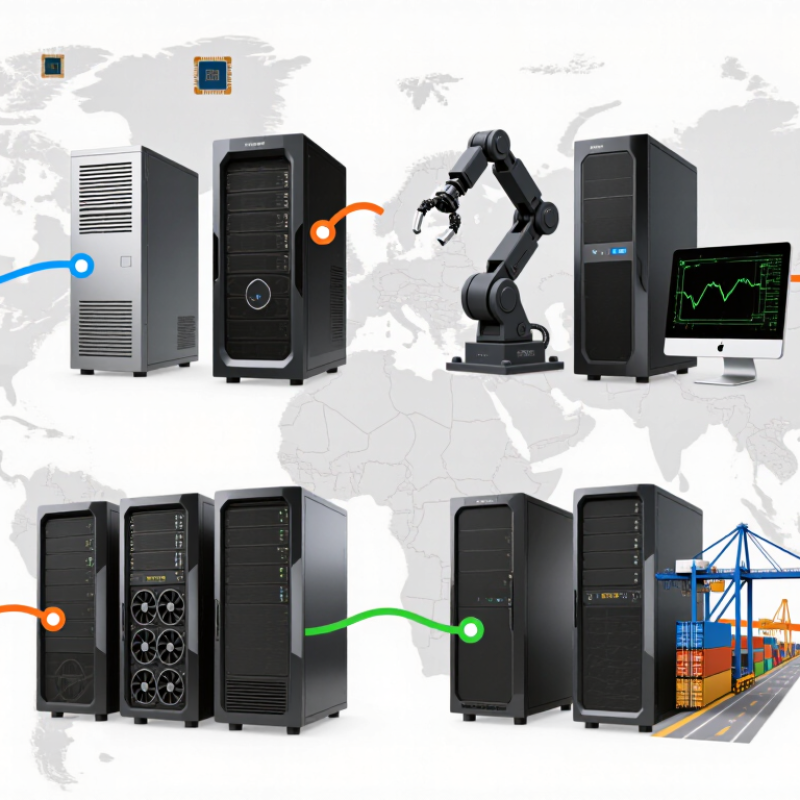
Edge AI servers are compact computing systems designed to process data near its source. They may sit in factories, hospitals, retail stores, or transport facilities. Unlike distant cloud servers, they reduce the time required to send data away and receive decisions. This makes them useful for visual inspection, equipment monitoring, speech analysis, and real-time alerts.
Their role extends beyond speed. An edge AI server can filter camera streams, protect sensitive operational data, and continue working during unstable network conditions. A practical system usually combines accelerators, reliable storage, thermal control, and software for model deployment. In factory environments, technicians often value predictable maintenance more than impressive benchmark scores. Dust, vibration, heat, and limited rack space can affect performance.
That detail is easy to underestimate. A powerful server may still fail if cooling is weak or updates are difficult. When assessing leading manufacturers in China, buyers should examine testing records, local support, workload compatibility, and long-term component availability. Specifications provide evidence, but they do not tell the whole story. Field results can vary. Some deployments also reveal unexpected power costs or slower model updates. Careful trials, clear service agreements, and measurable response-time targets create more reliable decisions.
China’s edge AI server industry is shaped by a layered market structure, not a single group of manufacturers. The leading ten suppliers usually come from four categories: server producers, chip developers, industrial computer specialists, and system integrators. Their products serve factories, transport hubs, hospitals, retail sites, and public infrastructure. Unlike centralized cloud servers, edge systems must fit into limited cabinets. They also need low latency, strong cooling, and stable operation near machines.
Competition is practical. Buyers compare computing density, power consumption, local maintenance, and software compatibility. A compact server with several accelerators may support video inspection on a production line. A rugged unit may operate inside a dusty warehouse with unstable temperatures. Procurement teams often request trial deployment before signing large contracts. This exposes hidden costs, including network upgrades, model optimization, and technician training.
Market concentration is increasing, but it is not complete. Large suppliers benefit from manufacturing scale and broader service networks. Smaller firms remain important in specialized scenarios, especially where customized hardware is necessary. However, market data can be difficult to compare. Some reports count contract manufacturers, while others count solution providers. That difference can change the perceived top ten. The industry also depends heavily on software ecosystems and component supply. Hardware performance alone is not enough. Power limits matter more than brochures suggest. Reliability improves through repeated field testing, yet many buyers still underestimate long-term maintenance. This remains an area for careful review.
Estimated 2024 deployment share by application sector
Manufacturing represents the largest demand center because edge inference supports machine vision, predictive maintenance, and low-latency industrial control. Telecom and multi-access edge computing follow, while retail, logistics, public safety, energy, and healthcare contribute to a diversified market structure. The percentages are analytical estimates synthesized from publicly reported trends in China’s edge computing, AI infrastructure, and industrial digitalization markets.
China Top 10 Edge AI Server Manufacturers: Core Technologies Used in Chinese Edge AI Servers
Chinese edge AI servers increasingly combine CPUs, GPUs, NPUs, and programmable accelerators. This heterogeneous design supports video analysis, industrial inspection, and autonomous control near the data source. Gartner forecast that 75% of enterprise-generated data would be created and processed outside traditional data centers by 2025. That shift makes low latency more important than raw cloud capacity. A camera beside a production line can trigger an alert within milliseconds, without sending every frame to a distant data center.
Model compression is another core technology. Quantization, pruning, and knowledge distillation reduce memory use and inference costs. Containerized software also helps engineers move models across compact servers, gateways, and private clouds. High-speed Ethernet, 5G connectivity, and time-sensitive networking improve synchronization between machines. However, performance claims can vary sharply. MLPerf Inference results show that benchmark outcomes depend on model type, batch size, and hardware configuration.
Energy efficiency now deserves equal attention. The International Energy Agency reported that global data centers consumed about 460 TWh of electricity in 2022, with demand potentially exceeding 1,000 TWh by 2026. Edge systems reduce network traffic, but thousands of distributed devices create maintenance and cooling challenges. Trusted execution, secure boot, encrypted storage, and federated learning strengthen data protection. The picture is not clean. A faster accelerator may increase power draw, while a smaller model may lose accuracy. Manufacturers still need transparent testing under real factory temperatures, unstable networks, and continuous workloads.
| Rank | Anonymized Manufacturer Profile | Primary Compute Architecture | AI Acceleration Technology | Typical AI Precision | Memory and Storage | Networking | Software Stack | Common Edge Form Factor | Typical Deployment Scenarios | Key Differentiating Capability |
|---|---|---|---|---|---|---|---|---|---|---|
| 1 | Profile A: General-Purpose Edge Server | x86 server processors with multi-core CPU configurations | Discrete GPU or accelerator card for parallel inference and video analytics | FP32, FP16, INT8; supported models may use mixed precision | ECC DDR4 or DDR5 memory; NVMe SSD and optional SATA storage | 1GbE, 10GbE, 25GbE, and optional higher-speed uplinks | Linux, container runtimes, Kubernetes, ONNX Runtime, TensorRT-compatible workflows | 1U or 2U rackmount chassis | Smart factories, retail analytics, transportation, and enterprise branch offices | Broad software and accelerator compatibility |
| 2 | Profile B: High-Density GPU Edge Platform | Multi-socket x86 processors paired with one or more data-center-class GPUs | GPU tensor cores, CUDA-class parallel processing, and hardware video encoding | FP32, FP16, BF16, INT8, and sometimes INT4 inference | Large-capacity ECC DDR5; GPU memory; NVMe RAID options | 25GbE or 100GbE for multi-node or high-volume video workloads | Linux, Docker, Kubernetes, distributed inference frameworks, model optimization libraries | 2U to 4U rackmount chassis | Large-scale video surveillance, industrial inspection, and regional AI nodes | High throughput for simultaneous computer-vision workloads |
| 3 | Profile C: Arm-Based Energy-Efficient Server | 64-bit Arm server processors with high core density | Integrated NPU, optional accelerator module, and CPU vector extensions | FP16, INT8, and INT4 for optimized inference models | ECC DDR4 or DDR5; NVMe and embedded storage options | 1GbE, 10GbE, and selected 25GbE configurations | Linux distributions for Arm, containers, ONNX Runtime, and vendor NPU SDKs | Short-depth 1U chassis or compact edge appliance | Telecommunications sites, smart buildings, and distributed IoT gateways | Lower power consumption and compact deployment footprint |
| 4 | Profile D: Domestic-Processor Compatible Server | Domestic x86-compatible, Arm-based, or other locally developed CPU platforms | Discrete accelerator, integrated NPU, or PCIe AI acceleration card | FP32, FP16, INT8, with support depending on the accelerator SDK | ECC memory; NVMe, SATA, and locally sourced storage options | 10GbE and 25GbE; optional redundant network interfaces | Domestic Linux distributions, container platforms, compiler toolchains, and AI SDKs | 1U or 2U rackmount system | Government, finance, public infrastructure, and controlled IT environments | Support for localized hardware and software supply chains |
| 5 | Profile E: NPU-Optimized Inference Server | x86 or Arm host CPU with dedicated neural-processing hardware | NPU matrix engines, on-chip SRAM, and dedicated convolution operators | INT8 and INT4; FP16 support varies by NPU design | Moderate ECC or non-ECC system memory; NVMe boot and data storage | 1GbE, 10GbE, and optional industrial Ethernet interfaces | C/C++ SDKs, Python APIs, ONNX conversion tools, and quantization utilities | Compact 1U chassis or embedded box | Face detection, object recognition, quality inspection, and access control | Consistent low-latency inference with relatively low power draw |
| 6 | Profile F: FPGA-Accelerated Edge Server | Multi-core x86 or Arm host processor with PCIe FPGA accelerator | Reconfigurable logic, DSP blocks, pipeline processing, and hardware data paths | INT8, INT16, and fixed-point arithmetic; floating-point support varies | ECC system memory; onboard accelerator memory; NVMe storage | 10GbE, 25GbE, and deterministic industrial networking options | FPGA toolchains, OpenCL or C/C++ acceleration flows, Linux, and containers | 1U or rugged short-depth chassis | Industrial vision, telecommunications, radar, and signal-processing workloads | Deterministic latency and adaptable hardware pipelines |
| 7 | Profile G: Ruggedized Outdoor Edge Server | Low-power x86 or Arm processor with optional AI accelerator | Integrated GPU, NPU, or compact discrete accelerator | FP16 and INT8 are common for thermal and power efficiency | Industrial-grade memory and SSD; shock-resistant storage options | Gigabit Ethernet, fiber, 5G, Wi-Fi, and serial or CAN interfaces | Linux, Docker, edge orchestration agents, and remote device management | Fanless or sealed IP-rated enclosure; wall, vehicle, or pole mounting | Mining, energy, outdoor security, transport, and remote industrial sites | Wide-temperature operation, vibration resistance, and remote maintenance |
| 8 | Profile H: Video-Analytics Edge Appliance | x86 or Arm host CPU optimized for multiple camera streams | GPU, NPU, or ASIC video-inference engine with hardware codec support | INT8 and FP16 for detection, tracking, and classification models | ECC or standard DDR memory; NVMe and high-capacity SATA storage | Multiple 1GbE or 10GbE camera-facing ports; uplink redundancy | Video management software, AI inference SDKs, REST APIs, and container support | Compact 1U appliance or desktop edge box | Smart cities, campuses, logistics parks, stores, and traffic monitoring | High camera-stream density with reduced cloud bandwidth requirements |
| 9 | Profile I: Telecom Multi-Access Edge Server | High-core-count x86 or Arm server processors | GPU, FPGA, SmartNIC, DPU, or NPU acceleration depending on workload | FP16, BF16, INT8, and workload-specific packet-processing formats | ECC DDR5, NVMe boot drives, and redundant enterprise storage | 25GbE, 100GbE, SR-IOV, time-sensitive networking, and optional 5G interfaces | Kubernetes, OpenStack, virtual network functions, and cloud-native orchestration | 1U or 2U rackmount telecom edge node | 5G MEC, content delivery, smart manufacturing, and low-latency services | Network virtualization and low-latency processing near users or devices |
| 10 | Profile J: Storage-Integrated AI Edge System | x86 or Arm server CPU combined with an AI accelerator | GPU, NPU, or ASIC acceleration for analytics performed beside local data | FP16 and INT8; quantized models are widely used for storage efficiency | ECC memory; NVMe cache, SATA storage, RAID, and erasure-coding options | 10GbE or 25GbE with optional storage networking interfaces | Linux, containers, distributed file systems, object storage, and model-serving tools | 2U storage server or compact hyperconverged appliance | Manufacturing data lakes, hospitals, campuses, and branch data centers | Local data retention, privacy-aware analytics, and reduced cloud transfer costs |
Note: The profiles are anonymized technology categories rather than disclosed company or brand records. Actual configurations, accelerator performance, supported precisions, operating temperature ranges, and software compatibility vary by model and generation.
China’s Top 10 Edge AI Server Manufacturers
China’s edge AI server market is expanding beyond traditional data centers. IDC valued China’s AI server market at approximately US$23.1 billion in 2023, with strong growth driven by intelligent manufacturing, transport, retail, and public services. The leading ten manufacturers compete through compact GPU systems, rugged designs, and faster local inference.
Market selection requires more than processor speed. The strongest manufacturers provide thermal control for factory floors, low-latency networking, and remote device management. Their systems often support cameras, sensors, and industrial robots within a few meters of the data source. MarketsandMarkets expects the global edge AI software market to grow from about US$2.7 billion in 2024 to US$7.3 billion by 2029. That growth increases demand for efficient hardware and flexible deployment.
Reliability remains difficult.
In field evaluations, power limits, dust, and inconsistent connectivity can reduce performance. A server that works well in a laboratory may struggle beside a production line. Buyers should check sustained inference speed, operating temperature, cybersecurity controls, and replacement support. Some rankings also rely heavily on shipment estimates, which are not fully transparent. That limitation deserves attention. The top ten should therefore be judged by verified deployments, technical service, energy efficiency, and measurable uptime, not marketing visibility alone.
When comparing China’s top edge AI server manufacturers, buyers should examine measurable performance rather than impressive product claims. IDC’s Worldwide Edge Spending Guide estimated global edge spending at about $232 billion in 2024, with continued growth toward 2027. This expansion increases the need for reliable local inference hardware. Compare latency, throughput, memory capacity, accelerator compatibility, and performance per watt under the same workload. A server that processes camera streams quickly may perform poorly with language models. The difference matters.
Field conditions deserve equal attention. Check operating temperature, dust protection, noise levels, remote management, and replacement procedures. Gartner’s infrastructure research repeatedly highlights operational resilience and lifecycle management as major purchasing concerns. Ask manufacturers for MLPerf Inference results, thermal test records, firmware policies, and failure-rate data. Also examine support response times and spare-parts availability inside your deployment region. A low purchase price can become expensive after repeated maintenance visits.
Tips: Test a realistic pilot before signing a large contract. Use your own models, cameras, storage, and network limits. Measure 95th-percentile latency, not only average speed. Review encryption, access controls, software updates, and applicable certifications. Be cautious with vendor-selected benchmarks; they may favor one architecture. This is where many comparisons become imperfect. Power bills, cooling changes, and technician travel are often missing from spreadsheets. A transparent total-cost model should include them.
Intelligent manufacturing, transport, retail, and public services are increasing demand. These servers process data near cameras, sensors, and robots. That reduces delays. Growth estimates vary, so market figures deserve careful checking.
Factories and transport sites often need immediate local decisions. Sending every video stream to a distant center can add delay. A nearby server can analyze images within a few meters. Connectivity may still fail.
Compare latency, throughput, memory, accelerator support, and performance per watt. Use the same model and workload for every system. A server may handle camera streams well but struggle with language models. One number is not enough.
Run a realistic pilot before signing a large contract. Use your own models, cameras, storage, and network limits. Measure 95th-percentile latency, not only average speed. Laboratory results can look better than factory results.
Heat, dust, power limits, and unstable connections can create problems. A production line may contain vibration, metal dust, and limited cooling. Check operating temperature, protection levels, noise, and sustained inference speed. Clean rooms are misleading.
Look for remote monitoring, secure access, firmware updates, and failure alerts. Technicians should identify faults without visiting every machine. Ask about replacement procedures and regional spare-parts availability. Support promises can remain vague.
Important, especially when servers connect with cameras, sensors, and factory networks. Review encryption, access controls, update policies, and applicable certifications. Ask how administrators receive security patches. Do not assume protection is automatic.
Include electricity, cooling changes, maintenance visits, spare parts, and technician travel. A cheaper server may require frequent repairs. Calculate total cost over its operating life. Many spreadsheets omit inconvenient expenses.
No. Shipment estimates may be incomplete or difficult to verify. Buyers should examine documented deployments, uptime, service quality, and energy efficiency. Request thermal records, benchmark results, and failure-rate data. Rankings are imperfect.
This article explores the role of edge AI servers in processing data close to where it is generated, helping reduce latency, improve privacy, and support real-time applications such as industrial automation, smart transportation, healthcare, retail, and energy management. It examines China’s edge AI server industry, including its market structure, demand drivers, deployment environments, and the cooperation between hardware developers, software providers, system integrators, and end users.
The article also reviews the core technologies behind Chinese edge AI servers, including heterogeneous computing, specialized AI accelerators, high-speed networking, compact thermal design, secure data processing, and intelligent power management. It presents a neutral overview of China’s top 10 edge AI server manufacturers without focusing on brand promotion, while explaining how to compare each edge ai server manufacturer through criteria such as computing performance, energy efficiency, reliability, scalability, software compatibility, customization capability, technical support, delivery capacity, and total cost of ownership.
