Dynova
China has become an important source of AI server hardware, serving cloud providers, research teams, and enterprise buyers worldwide. Its manufacturers offer systems built for demanding workloads, including model training, inference, and high-performance computing. Yet a product page rarely tells the whole story. Buyers need to examine accelerator compatibility, memory capacity, power draw, cooling design, and support arrangements before comparing quotes.
This guide introduces leading ai server companies serving global buyers and explains what to assess when evaluating them. It considers product range, engineering capabilities, customization, manufacturing experience, and the practical details of international procurement. A well-configured server should fit the intended workload, rack space, facility power, and network environment—not just look impressive on a specification sheet. Small details matter. A cooling system that works in one data center may not suit another, and lead times can change with component availability. Buyers should confirm current configurations, warranty terms, service coverage, and applicable certifications directly with each supplier.
The comparison is a starting point, not a final verdict. Company capabilities and product availability can shift, so independent verification remains essential. Ask for clear documentation and test plans. Then compare systems under realistic conditions, including sustained workloads and expected operating costs. The best choice is rarely the one with the longest feature list. It is the one that meets technical requirements and can be supported reliably over its service life. One point deserves extra thought: supplier claims are useful, but real deployment references may reveal gaps that a datasheet cannot.
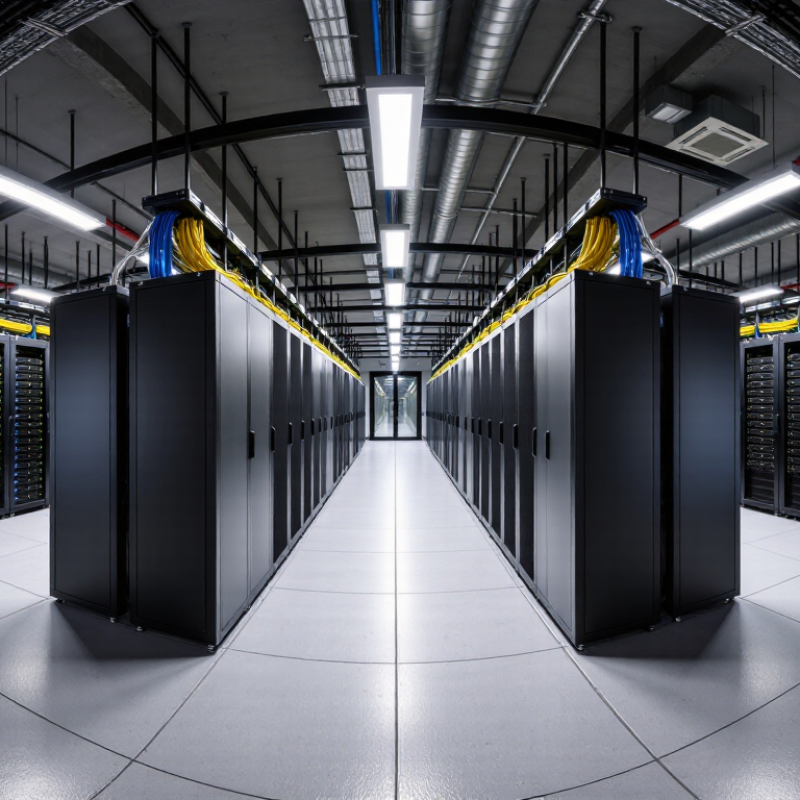
An AI server is a specialized computing system designed to train, deploy, and manage artificial intelligence models. Unlike a standard server, it combines powerful processors, high-speed memory, and accelerator cards for parallel calculations. These components process thousands of mathematical operations simultaneously. This reduces training time and supports demanding workloads, such as image recognition, language processing, and scientific simulation.
In modern computing, AI servers act as the engine behind intelligent applications. They can analyze large datasets, respond to real-time requests, and support multiple users. A reliable system also needs efficient cooling, stable networking, strong data protection, and flexible expansion options. In practical testing, performance depends on the complete architecture, not one impressive specification. More processing power does not always mean better results. Energy use, software compatibility, and maintenance costs can change the final decision.
Tips: Check workload requirements before purchasing. Measure memory capacity, accelerator compatibility, network speed, and cooling performance. Ask for independent test data when possible. A small pilot project may reveal hidden limits. It is easy to overestimate theoretical speed. Real performance often changes under continuous workloads, uneven data, or poor software optimization. Global buyers should also confirm service support, delivery conditions, documentation quality, and compliance requirements for their region.
China’s AI server industry is moving from experimental clusters toward sustained production workloads. The China Academy of Information and Communications Technology reported that China’s overall computing power reached about 230 EFLOPS in 2023. Intelligent computing became a major growth engine. This demand comes from model training, industrial inference, scientific simulation, and public-sector applications.
MARKET STRUCTURE & INFRASTRUCTURE
Market structure remains layered. Large system integrators handle complex projects, while specialized manufacturers supply servers, accelerators, storage, and liquid-cooling systems. IDC’s Worldwide AI and Generative AI Spending Guide forecasts global AI infrastructure spending to exceed 100 billion dollars by 2028. China’s suppliers are responding with denser racks and more flexible configurations. A typical deployment may require high-speed interconnects, redundant power, and cooling capacity above 30 kilowatts per rack.
WHAT BUYERS SHOULD EVALUATE
Power efficiency now matters as much as computing speed. Buyers should examine inference performance, firmware stability, replacement cycles, and local service response. Specifications alone can mislead. A server may look powerful on paper but perform poorly under sustained heat. This is where many procurement evaluations remain incomplete. The industry also faces pressure from supply-chain uncertainty, software compatibility, and uneven data-center standards. Those weaknesses deserve more attention.
Chinese AI server companies stand out through integrated engineering, not simply high processor counts. Many combine accelerator cards, high-speed networking, and liquid or air cooling in systems designed for demanding workloads. Their core strengths often include flexible configuration, large-scale manufacturing, and the ability to adapt chassis, power delivery, and storage to a buyer’s infrastructure. That flexibility matters. A research lab may need dense GPU nodes, while a regional data center may prioritize predictable power use and easier maintenance.
For global buyers, the practical test is how a system behaves after installation. Ask for measured performance under sustained workloads, not only peak specifications. Check accelerator compatibility, network throughput, spare-part availability, and the time required to replace a failed fan or power supply. Heat is unforgiving. Cooling design can affect reliability, noise, and operating costs, especially in crowded racks. Documentation and technical support also deserve close review; clear service procedures can save hours during an outage.
Some claims are difficult to compare because test conditions differ. That is worth questioning. Buyers should request configuration-specific reports and verify that software, power limits, and ambient temperatures match their intended use. Chinese suppliers may offer strong customization and competitive production capacity, but delivery schedules and support quality can vary. A careful pilot deployment often reveals more than a polished specification sheet.
| Capability Area | Common Strength in China’s AI Server Supply Base | Relevance to Global Buyers | Questions to Verify When Evaluating a Supplier |
|---|---|---|---|
| Accelerator Configuration | AI server platforms can be configured for accelerator-intensive training and inference workloads, with supported processors and accelerator options varying by model and export availability. | Helps buyers match compute density and accelerator choice to model size, workload, and local availability. | Which accelerator models are supported? Are the required cards available in the destination market, and are they validated with the offered server configuration? |
| High-Density System Design | Server manufacturers offer multi-GPU systems designed to combine compute, memory, power delivery, and thermal management in a single platform. | Can reduce the number of separate systems needed for compute-intensive workloads, subject to rack power and cooling limits. | What are the system’s supported GPU count, power draw, dimensions, and recommended rack requirements? |
| Networking and Cluster Integration | AI infrastructure solutions may integrate high-speed server networking and cluster components; exact network interfaces and software support are configuration-dependent. | Important for scaling distributed training and keeping communication between servers aligned with workload needs. | Which network adapters and speeds are supported? Are switching, cabling, and cluster-management components included or supplied separately? |
| Thermal Management | Platforms are designed around the heat output of their selected processors and accelerators. Air cooling is common, while liquid-cooling options depend on the system and deployment design. | Helps buyers assess whether a system can operate within the facility’s cooling capacity and environmental limits. | Is the offered configuration air-cooled or liquid-cooled? What facility connections, operating conditions, and service procedures are required? |
| Manufacturing and Configuration Flexibility | China has a substantial electronics and server-manufacturing ecosystem, supporting a range of system configurations and integration requirements. | May provide options for tailoring memory, storage, networking, and chassis configurations to project needs. | Which components are configurable? What are the production lead time, component-origin details, and change-control process? |
| Software and Workload Compatibility | AI server performance depends on the interaction of hardware, drivers, frameworks, and software libraries; compatibility should be confirmed for the exact configuration. | Reduces the risk of purchasing hardware that cannot run the buyer’s intended models or deployment stack efficiently. | Which operating systems, frameworks, drivers, and management tools are supported? Can the supplier provide workload-specific validation results? |
| Deployment and Integration | Suppliers and integrators may provide services such as system configuration, rack integration, cluster setup, and deployment support; scope differs by project. | Useful for buyers building a complete AI cluster rather than purchasing standalone servers. | Does the proposal include installation, acceptance testing, cluster integration, documentation, and on-site or remote support? |
| Serviceability and Lifecycle Support | Warranty terms, spare-parts coverage, firmware updates, and service availability are determined by the specific supplier, reseller, product, and destination country. | Directly affects uptime and total cost of ownership throughout the server lifecycle. | What are the warranty period, response targets, spare-parts locations, escalation process, and long-term firmware-support policy? |
| Compliance and Export Readiness | Product certifications, component availability, and export or import requirements vary by product configuration and destination market. | Helps buyers identify regulatory, customs, and procurement requirements before placing an order. | Can the supplier provide applicable certifications, country-of-origin documentation, shipping terms, and confirmation of destination-market availability? |
Buyer note: This table summarizes capability areas across the Chinese AI server supply base and does not rank or identify individual companies. Specifications, supported components, certifications, and service coverage must be verified against the exact model and destination market.
AI server selection begins with the workload, not a headline performance figure. Training large models often calls for dense GPU systems, high-speed links between accelerators, and carefully managed cooling. Inference deployments may favor compact, energy-efficient servers that respond quickly to steady streams of requests. Memory capacity matters, too: insufficient memory can leave expensive processors waiting. That is easy to overlook.
Product types range from single-node GPU servers to multi-node clusters built for distributed training. Some configurations use air cooling and fit standard data-center racks; higher-density systems may require liquid cooling and upgraded power delivery. Buyers should compare accelerator count, memory bandwidth, network speed, storage throughput, and service access. A specification sheet cannot show every constraint. Check the facility’s power budget, rack depth, cooling capacity, and maintenance procedures before choosing a design.
Deployment scenarios differ sharply. A research lab may need flexible clusters for changing experiments, while a cloud provider may prioritize utilization, isolation, and predictable support. Hospitals, factories, and retail operations often place inference servers closer to local data sources, reducing response delays and network traffic. Edge sites can be dusty, warm, or space-constrained. Test under realistic conditions, including peak loads and failed-node recovery. Performance claims deserve verification, and comparisons can be imperfect when software settings differ. That deserves reflection. A sound purchasing decision weighs workload evidence, operating costs, and long-term serviceability—not just benchmark scores.
Global buyers should assess Chinese AI server suppliers through evidence, not headline specifications. The International Energy Agency’s Electricity 2024 report estimates that data centres, AI, and cryptocurrency could consume about 1,000 terawatt-hours of electricity in 2026, roughly double 2022 levels. That makes power efficiency a purchasing issue, not a minor technical detail. Ask suppliers for measured power draw under defined workloads, cooling requirements, and thermal test results. Request the test conditions, too.
Check whether a supplier can document component traceability, production capacity, and quality controls across multiple batches. Ask for sample inspection records and clear warranty procedures. Uptime Institute’s 2024 Global Data Center Survey found that power capacity and supply constraints were among operators’ major concerns. Buyers should therefore verify rack-level power needs and compatibility with their own facility before placing a large order. A detailed specification sheet helps, but it cannot replace a witnessed test.
Compare service response times, spare-parts availability, and firmware update processes in writing. Confirm who handles diagnosis when a system fails across time zones. A small pilot can reveal issues that sales calls miss. Keep one awkward question in the process: what happens when delivery slips? Supplier claims deserve scrutiny, including this advice. A spreadsheet can still mislead. Use comparable workload tests and record the results before committing.
Many combine accelerator cards, high-speed networking, and tailored cooling. Flexible chassis and power options can suit different facilities.
Run a small pilot with the intended software and workload. Measure sustained performance, power draw, and network throughput. Peak figures alone tell little.
Dense racks can trap heat. Cooling affects reliability, noise, and operating costs. Heat is unforgiving.
Ask for measured power use under defined workloads, plus cooling requirements and thermal test conditions. Check rack-level power needs against your facility.
Request component traceability, sample inspection records, and quality-control details across production batches. One polished sample may not represent every batch.
Confirm response times, spare-part availability, firmware update procedures, and who diagnoses failures across time zones. Get clear warranty steps, too.
Use comparable workload tests and record the software, power limits, and ambient temperature. A spreadsheet can still mislead.
It can expose compatibility gaps, noisy cooling, or slow replacement of a failed fan or power supply. Delivery delays deserve a direct question.
No. Request configuration-specific reports and witnessed tests. Support quality and delivery schedules can vary, and I would not assume otherwise.
AI servers are specialized computing systems designed to support artificial intelligence workloads such as model training, inference, data analysis, and high-performance computing. They combine powerful processors, accelerators, high-speed memory, advanced networking, and efficient cooling to handle large-scale data and complex algorithms. China’s AI server industry is developing through strong demand from cloud computing, smart manufacturing, research institutions, and enterprise digital transformation, with growing attention to performance, energy efficiency, supply-chain resilience, and flexible deployment.
This article introduces leading ai server companies in China by examining their technical capabilities, product portfolios, manufacturing strengths, and service coverage without focusing on specific brands. It also explains major product types, including training servers, inference servers, edge systems, and customized solutions, as well as deployment scenarios across data centers, private infrastructure, and hybrid environments. For global buyers, important evaluation factors include computing performance, compatibility, product reliability, cybersecurity, energy consumption, technical support, delivery capability, compliance, and long-term supplier cooperation.
