Dynova
China’s AI server market is expanding rapidly, driven by generative AI, intelligent manufacturing, and large-scale research. This guide examines ten leading manufacturers for 2026, focusing on practical performance rather than marketing language. It considers GPU compatibility, CPU flexibility, memory capacity, networking speed, storage design, and thermal management. These details matter when a server operates continuously inside a crowded data center.
A reliable evaluation also examines manufacturing experience, technical support, delivery capability, and long-term maintenance. Some vendors provide dense eight-GPU systems, while others specialize in liquid-cooled platforms for demanding workloads. We will also review compatibility with major accelerator ecosystems, virtualization tools, and enterprise software. The phrase best ai server manufacturer should not describe only the lowest price or the highest benchmark score. Power consumption, firmware stability, spare parts, and service response can change the real ownership cost.
No ranking is permanently correct. Public specifications may differ from tested performance, and product lines can change during 2026. That uncertainty deserves attention. This overview uses available company information, product documentation, industry reputation, and practical purchasing criteria. It does not treat every claim as proven fact. Buyers should confirm current configurations, certifications, warranty terms, and delivery schedules before signing contracts. A powerful server is not automatically a suitable server. The best choice depends on workload size, deployment location, budget, cooling capacity, and expected expansion. Small details matter. And some conclusions may need revision as new chips, policies, and architectures enter the market.
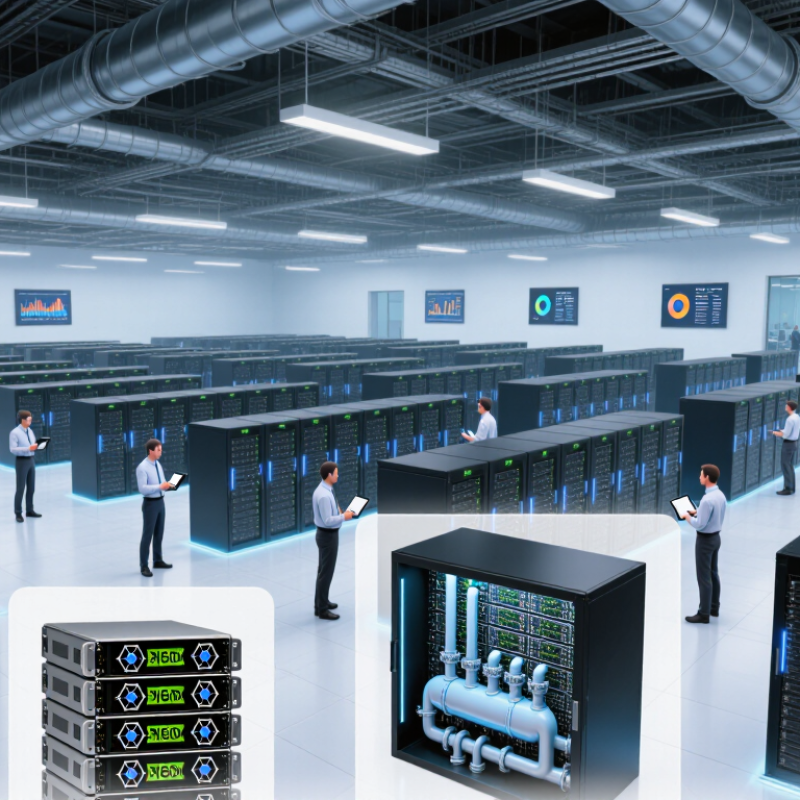
China’s AI server industry is moving from pilot projects toward large, tightly managed computing clusters.
IDC reported that China’s artificial intelligence infrastructure market reached approximately 40 billion yuan in 2024. Its forecast indicates continued double-digit growth through 2028. This expansion is driven by generative AI, industrial simulation, autonomous systems, and government-backed computing centers.
Demand is changing the server design itself. Many new racks combine eight or more accelerator cards, high-speed interconnects, and liquid cooling. Power density can exceed 30 kilowatts per rack in advanced deployments. The China Academy of Information and Communications Technology has also identified computing power as a core foundation of the digital economy. That finding supports investment in domestic supply chains, maintenance services, and energy-efficient data centers.
However, market size does not equal operational success. TrendForce estimated that global AI server shipments would grow strongly in 2025, while supply remained constrained by advanced components and networking equipment. China’s manufacturers must therefore improve thermal control, software compatibility, and long-term reliability. Procurement teams should examine measured performance, not only headline accelerator counts. A larger cluster can still waste electricity.
The top ten manufacturers in 2026 will likely be judged through complete delivery capability. This includes hardware integration, local service coverage, firmware updates, and transparent testing. Public data remains incomplete. That limitation deserves attention. Forecasts can change quickly when chip access, electricity prices, or enterprise budgets shift.
Operational experience reveals weaknesses that brochures often hide. We review cooling performance during sustained workloads, component failure rates, firmware stability, and remote management tools. Service response also matters. Technicians should provide clear escalation procedures, replacement timelines, and documented maintenance records. Independent certifications, cybersecurity controls, and supply-chain transparency strengthen a manufacturer’s reliability.
Total cost deserves equal attention. A lower purchase price may conceal expensive electricity, licensing limits, or difficult upgrades. We compare five-year operating costs, warranty coverage, expansion options, and deployment support. Customer references should come from verified data centers, research institutions, or enterprise environments. Short pilot tests can expose thermal throttling and network bottlenecks.
No ranking is flawless. Results may change with workload design, regional service quality, and component availability. We therefore score evidence, not promises, while recording test conditions openly. Some manufacturers may perform strongly in one area but remain immature in documentation or long-term support. That is worth noting.
China’s Top 10 AI Server Manufacturers in 2026 should be judged by more than shipment volume. The leading ten suppliers are expected to compete through GPU integration, high-speed networking, liquid cooling, and domestic service coverage. IDC reported that global AI infrastructure investment could exceed 200 billion dollars by 2028. TrendForce also forecast strong AI server shipment growth in 2025, near 28 percent. These figures show why China’s market is moving quickly.
A reliable ranking should examine rack density, memory bandwidth, delivery records, energy efficiency, and technical support. In real procurement, a server may look powerful on paper but struggle with cooling, firmware updates, or local maintenance. China’s top ten manufacturers should therefore provide clear test conditions and measurable performance data. PUE figures, response times, and failure rates matter. Marketing claims alone are not enough. Even careful rankings can miss smaller suppliers with better regional service.
Tips: Check accelerator compatibility, not only processor speed. Ask for a cooling test at full load. Verify spare-parts availability near your data center. Compare three-year operating costs, because electricity can quietly exceed the purchase price. Gartner and IDC both emphasize infrastructure readiness as a foundation for dependable AI deployment. That point deserves more attention in 2026.
China’s Top 10 AI Server Manufacturers in 2026 — company names and brand-specific data intentionally omitted.
| Rank | Anonymized Manufacturer Profile | Primary Server Focus | Typical Form Factors | Accelerator Support | High-Speed Networking | Cooling Capability | Target Deployment | Evaluation Score |
|---|---|---|---|---|---|---|---|---|
| 1 | Manufacturer Profile 01 | Large-scale AI clusters | 4U–8U | Multi-accelerator | 200–400Gb/s Ethernet | Air and liquid cooling | Cloud and research centers | 95/100 |
| 2 | Manufacturer Profile 02 | General-purpose AI servers | 2U–4U | PCIe accelerator systems | 100–200Gb/s Ethernet | Advanced air cooling | Enterprise data centers | 92/100 |
| 3 | Manufacturer Profile 03 | AI training platforms | 4U–8U | High-density accelerator | 200Gb/s Ethernet | Direct liquid cooling | National-scale computing | 90/100 |
| 4 | Manufacturer Profile 04 | Inference and edge AI | 1U–2U | Low-latency PCIe systems | 25–100Gb/s Ethernet | Air cooling | Telecom and industrial sites | 88/100 |
| 5 | Manufacturer Profile 05 | Storage-intensive AI systems | 2U–4U | GPU and accelerator ready | 100Gb/s Ethernet | Air cooling with optional liquid loop | Data analytics and model serving | 86/100 |
| 6 | Manufacturer Profile 06 | Open-computing platforms | 1U–4U | Modular accelerator support | 25–100Gb/s Ethernet | Air cooling | Flexible enterprise deployments | 84/100 |
| 7 | Manufacturer Profile 07 | HPC and scientific computing | 4U–8U | Multi-node accelerator | 100–200Gb/s Ethernet | Air and liquid cooling | Universities and laboratories | 82/100 |
| 8 | Manufacturer Profile 08 | Compact AI infrastructure | 1U–2U | Single- and dual-accelerator | 25–100Gb/s Ethernet | Air cooling | SMEs and private clouds | 80/100 |
| 9 | Manufacturer Profile 09 | Customized AI servers | 2U–8U | Configurable accelerator design | 25–200Gb/s Ethernet | Project-based cooling design | OEM and system integration | 78/100 |
| 10 | Manufacturer Profile 10 | Energy-efficient AI servers | 1U–4U | Efficient inference accelerators | 25–100Gb/s Ethernet | Optimized air cooling | Cost-sensitive deployments | 76/100 |
China’s leading AI server manufacturers are competing through architecture, cooling, and deployment reliability. IDC’s Worldwide AI and Generative AI Spending Guide expects global AI infrastructure investment to exceed 150 billion dollars by 2027. That pressure is reshaping product design. The strongest suppliers now offer dense accelerator servers, high-bandwidth interconnects, and configurable memory systems. Some platforms support eight or more accelerators in one chassis. Others focus on compact inference servers for hospitals, factories, and financial offices.
Liquid cooling is becoming a practical advantage, not a laboratory feature. Omdia’s data-center research highlights rising adoption of direct-to-chip cooling as rack power increases. Several Chinese manufacturers provide cold-plate systems, leak monitoring, and rear-door heat exchangers. Their products also emphasize modular maintenance. Engineers can replace power units, storage devices, or accelerator trays without removing the full rack. That saves valuable hours.
Energy efficiency remains less consistent.
The top ten companies also differ in software strength. Some provide optimized drivers, container tools, and domestic computing ecosystems. Others deliver stronger hardware customization but weaker application support. Gartner has repeatedly identified power, thermal design, and software integration as major AI infrastructure concerns. In practice, specifications can look impressive while sustained performance falls during long training runs. Buyers should test real workloads, cooling behavior, and failure recovery before accepting a ranking. Product sheets alone are not enough.
Choosing a Chinese AI server manufacturer in 2026 requires more than comparing processor prices. TrendForce reported that global AI server shipments grew sharply in 2024, increasing pressure on power, cooling, and delivery capacity. A reliable supplier should provide tested GPU compatibility, clear thermal data, and evidence of stable component sourcing. Ask for rack-level performance, not only laboratory results.
IDC forecasts global AI infrastructure spending to keep expanding strongly through 2028. This growth makes long-term service important. Check burn-in procedures, failure rates, firmware management, and replacement timelines. Request references from data centers with similar workloads. A manufacturer should explain liquid-cooling options, power redundancy, and operating costs in practical terms. Vague answers are warning signs. Sometimes, the cheapest configuration becomes expensive after deployment.
Tips: Compare three suppliers using the same workload, power limit, and network design. Inspect a running system if possible. Measure noise, temperature, and restart recovery. Require independent certification and documented security controls. Do not trust impressive screenshots alone. An imperfect pilot is useful, but ignoring its weaknesses is not. Also review export rules, warranty coverage, and local technical support before signing. Gartner’s infrastructure research repeatedly highlights availability and operational resilience as critical for AI deployments, yet many purchasing teams still focus mainly on initial hardware cost. That is a costly habit.
Recommended evaluation priorities for comparing Chinese AI server manufacturers in 2026
GPU and accelerator compatibility should receive the highest weighting because AI training and inference performance depend primarily on supported compute platforms. Interconnect bandwidth, memory capacity, cooling design, software compatibility, long-term support, compliance, delivery capability, and total cost of ownership are also essential when selecting a Chinese AI server manufacturer. These percentages are a practical comparison framework rather than company market-share data.
The market reached about 40 billion yuan in 2024. Double-digit growth may continue through 2028. Forecasts can change.
Generative AI, industrial simulation, autonomous systems, and public computing centers are increasing demand. Large clusters are replacing small pilot projects.
Many systems combine eight or more accelerator cards, fast interconnects, and liquid cooling. Rack power can exceed 30 kilowatts.
Sustained training creates intense heat inside dense racks. Direct-to-chip cooling and leak monitoring can reduce thermal throttling risks.
Buyers should test training, inference, and data processing workloads. Measured results matter more than accelerator counts printed on a specification sheet.
Strong suppliers offer local technicians, firmware updates, replacement timelines, and clear escalation procedures. Maintenance records should be easy to verify.
Not always. Electricity, software limits, difficult upgrades, and weak support can increase five-year operating costs.
No ranking is flawless. Results may change with workload design, electricity prices, component access, and regional service quality. That deserves caution.
Buyers should check drivers, container tools, application compatibility, and failure recovery. Hardware can look excellent while software support remains immature.
China’s AI server industry is entering a period of rapid expansion in 2026, driven by demand for generative AI, cloud computing, intelligent manufacturing, scientific research, and large-scale data processing. This overview examines the market’s scope, growth opportunities, supply-chain capabilities, and major development trends. It also explains the key criteria for evaluating manufacturers, including computing performance, GPU and accelerator compatibility, energy efficiency, cooling systems, scalability, product reliability, customization services, technical support, and overall cost-effectiveness.
The ranking of China’s top 10 AI server manufacturers is based on comprehensive product strength, innovation capabilities, manufacturing quality, delivery capacity, and customer service rather than brand popularity alone. Their technologies cover high-density computing platforms, liquid-cooling solutions, modular designs, intelligent management systems, and flexible configurations for different workloads. For buyers seeking the best ai server manufacturer in 2026, the most important considerations are application requirements, budget, expansion plans, data-center conditions, after-sales support, and long-term cooperation potential.
