 Dynova
Choosing the best cloud AI server manufacturer in China requires more than comparing processor counts. The real test is sustained performance inside a working data center. Gartner forecast worldwide public-cloud end-user spending to reach $675.4 billion in 2024. That projection shows how rapidly cloud infrastructure demand is expanding. IDC’s Worldwide Artificial Intelligence and Generative AI Spending Guide also identifies infrastructure as a major investment area through 2027. Yet growth alone does not prove quality. A reliable cloud ai server manufacturer should disclose benchmark conditions, thermal limits, power consumption, and component availability. Look closely. A rack may promise high throughput, then throttle under heat after hours of inference.
This guide examines Chinese suppliers through deployment evidence, engineering depth, and after-sales support. It considers GPU compatibility, liquid-cooling options, high-speed interconnects, storage bandwidth, and remote management. Uptime Institute’s Global Data Center Survey 2024 highlights operational resilience, power challenges, and efficiency pressures. Those concerns matter when each server operates continuously in a dense rack. The International Energy Agency reported that data centers consumed about 460 TWh of electricity globally in 2022, with demand expected to rise significantly by 2026. Therefore, energy efficiency belongs beside raw speed. Certifications, traceable warranties, cybersecurity controls, and export-compliance practices also require verification. No single vendor wins every workload. That is the uncomfortable part. A manufacturer may excel at model training but struggle with local support or replacement stock. Independent benchmarks, contract terms, and customer references should guide the final decision. This practical approach makes “best” measurable, not merely promotional.
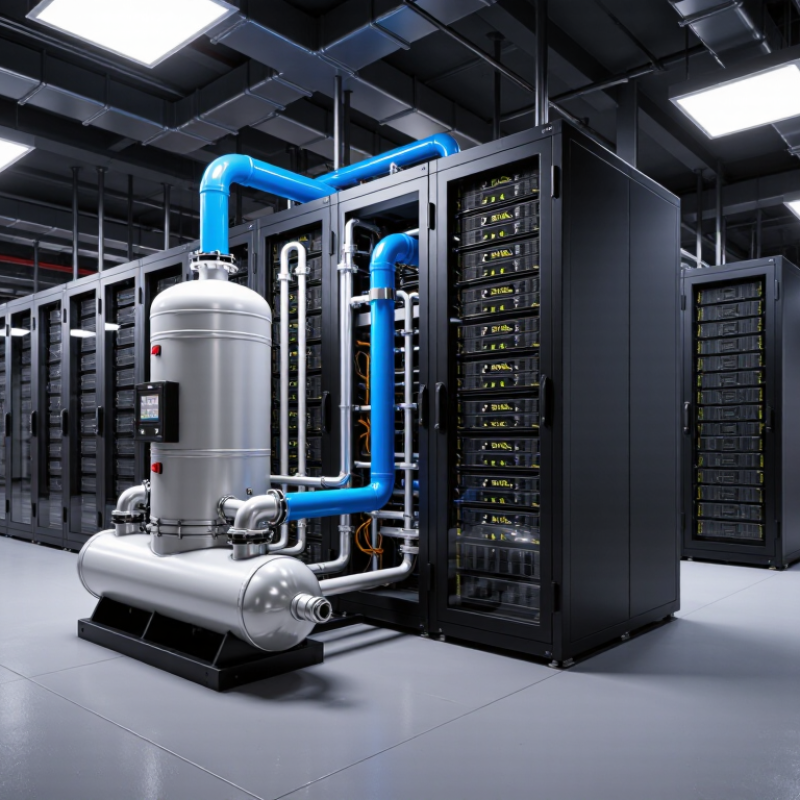
Best Cloud AI Server Manufacturer in China?
A cloud AI server manufacturer is more than a box assembler. It designs a dependable computing system for sustained workloads. That system must balance GPU density, memory bandwidth, networking, power delivery, and cooling. The Stanford AI Index 2024 reports that training compute for notable AI models has doubled roughly every five months. Therefore, a capable manufacturer should support rapid upgrades without rebuilding the entire rack. Product roadmaps matter.
Evidence matters more.
Operational testing separates engineering claims from usable performance. A serious manufacturer should provide thermal test results, power measurements, firmware controls, and validated configurations for different workloads. The Uptime Institute Global Data Center Survey 2024 found that many operators still experienced outages within three years, with power and cooling among recurring concerns. A cloud-focused supplier should test failure recovery, not only peak benchmark speed. Remote monitoring, replaceable components, and documented service procedures are practical requirements.
China’s manufacturing depth can support customized chassis, supply coordination, and faster engineering changes. However, low price is not proof of value. IDC’s Worldwide AI and Generative AI Spending Guide indicates that AI infrastructure investment continues to expand rapidly through the decade. That growth may expose weak support systems. A manufacturer should offer lifecycle planning, transparent spare-part availability, security updates, and measurable service-level commitments. I would still question impressive laboratory results without customer-site evidence. Specifications can look perfect. Real racks are less forgiving.
| Evaluation Dimension | Key Metric | Practical Benchmark for Cloud AI Servers | Why It Matters | Recommended Verification Evidence |
|---|---|---|---|---|
| Accelerator Compatibility | GPU or AI accelerator support | Support for current data-center accelerators, multi-accelerator configurations, PCIe Gen4 or Gen5 connectivity, and validated accelerator firmware. | Determines model-training performance, inference capacity, and future upgrade flexibility. | Published compatibility matrix, platform validation report, firmware release history, and workload test results. |
| Multi-GPU Architecture | Number of accelerators per server | Common cloud AI configurations range from 4 to 8 high-performance accelerators per server, depending on chassis design, power capacity, and cooling method. | Higher accelerator density can reduce rack space and network overhead for distributed workloads. | System configuration sheet, accelerator topology diagram, thermal test report, and power-budget documentation. |
| CPU and Memory | Host processing and system memory | Multi-socket server platforms with high-core-count CPUs, ECC memory, and scalable memory capacity suitable for data preprocessing and model serving. | Insufficient host resources can create data-loading, preprocessing, and orchestration bottlenecks. | CPU platform specification, maximum memory table, supported memory speeds, and benchmark results. |
| High-Speed Networking | Interconnect bandwidth and latency | 200 Gb/s or 400 Gb/s class networking is commonly used for large-scale distributed AI clusters, with support for RDMA-based communication where required. | Fast, low-latency networking improves distributed training efficiency and large-scale inference performance. | Network adapter compatibility list, bandwidth and latency measurements, topology design, and RDMA validation results. |
| Storage Performance | Local and shared storage throughput | NVMe solid-state storage, hot-swappable drive bays, and scalable shared-storage connectivity for large datasets and model checkpoints. | Storage performance directly affects dataset loading, checkpoint recovery, and inference service startup time. | Sequential and random I/O test results, storage configuration guide, endurance specifications, and failure-recovery procedure. |
| Power Delivery | Power capacity and redundancy | High-wattage redundant power supplies with adequate headroom for peak accelerator loads; configurations should be matched to the intended rack power limit. | Stable power delivery reduces unexpected shutdowns and supports sustained AI workloads. | Power-consumption measurements at idle and full load, efficiency data, redundancy design, and rack-level power calculations. |
| Thermal Management | Cooling design and operating range | Validated air-cooling or liquid-cooling options, with documented inlet-temperature limits and sustained full-load thermal testing. | AI accelerators generate concentrated heat; inadequate cooling can cause throttling, instability, or reduced component life. | Thermal test report, fan or liquid-loop specifications, airflow diagram, and operating-environment requirements. |
| Reliability | Component protection and serviceability | ECC memory, redundant fans, hot-swappable power supplies and drives, fault alerts, and replaceable field-serviceable components. | Cloud operators need continuous availability and rapid component replacement. | Failure-mode analysis, service manual, diagnostic logs, component replacement procedure, and warranty terms. |
| Remote Management | Out-of-band administration | Dedicated management controller with remote console, hardware monitoring, firmware update capability, event logging, and support for the Redfish standard. | Remote management reduces the need for on-site intervention in distributed data centers. | Management interface demonstration, Redfish API documentation, alert list, and firmware-management workflow. |
| Security | Platform and data protection | Secure boot, firmware verification, TPM 2.0 support, role-based administration, encrypted management access, and storage-encryption options. | Security controls help protect models, datasets, credentials, and cloud infrastructure. | Security architecture document, penetration-test summary, secure-boot configuration, and access-control policy. |
| Software Ecosystem | Operating-system and AI-stack support | Validated support for enterprise Linux distributions, container runtimes, orchestration platforms, accelerator drivers, and major AI frameworks. | Broad software compatibility reduces deployment effort and operational risk. | Certified software list, driver matrix, container images, installation guide, and reproducible benchmark scripts. |
| Manufacturing Quality | Process consistency and testing | Documented quality-management processes, burn-in testing, automated production testing, serial-number traceability, and configuration control. | Consistent manufacturing is essential when deploying large numbers of servers in a cloud environment. | Quality certificates, factory acceptance-test records, production test checklist, and traceability policy. |
| Compliance | Regulatory and environmental requirements | Applicable safety, electromagnetic-compatibility, energy-efficiency, and restricted-substance compliance for the target market. | Compliance supports legal deployment, procurement approval, and international shipment. | Declaration of conformity, safety and EMC test reports, environmental compliance documentation, and product labels. |
| Customization | Configuration and integration capability | Flexible choices for accelerator count, memory, storage, networking, chassis type, BIOS settings, rack integration, and operating system. | Cloud environments often require purpose-built configurations rather than standard enterprise servers. | Build-to-order options, engineering change process, integration drawings, sample bill of materials, and validation plan. |
| Lifecycle Support | Warranty, spare parts, and service coverage | Clear warranty terms, defined response times, regional support capability, spare-parts planning, and a documented product lifecycle policy. | Long-term support affects total cost of ownership and cluster availability. | Service-level agreement, warranty document, spare-parts list, escalation procedure, and end-of-life notice policy. |
| Performance Validation | Transparent AI workload testing | Reproducible results for training throughput, inference latency, power consumption, network utilization, and thermal behavior under sustained load. | Real workload data is more useful than theoretical component specifications alone. | Independent or witnessed benchmark reports, test scripts, workload parameters, power measurements, and environmental conditions. |
It balances accelerator density, memory bandwidth, networking, power delivery, and cooling. A dependable system supports sustained workloads, not only short benchmark bursts. Evidence matters more. Ask for thermal data, power measurements, firmware controls, and validated configurations.
Compare verified accelerator availability, delivery records, component traceability, and service commitments. A polished quotation proves little. Check whether the supplier can support upgrades without rebuilding the entire rack. Price alone can mislead.
Request results for inference latency, training throughput, memory bandwidth, and power consumption. Use identical batch sizes, network settings, and cooling conditions. Then repeat the tests with your own models. Test it yourself.
Ask whether the rack can operate continuously at its stated power limit. Measure inlet temperature, fan noise, and recovery after a node failure. Inspect liquid-cooling performance during high-temperature operation. Laboratory results may look excellent, but real racks are less forgiving.
Look for remote monitoring, replaceable components, firmware updates, and documented service procedures. Confirm spare-part locations and technical response times. Ask for measurable service-level commitments. Support may be slower than promised.
Large model training needs dense accelerator nodes, fast interconnects, and dependable cooling. Fine-tuning benefits from flexible configurations and expandable storage. Inference prioritizes latency, energy efficiency, and predictable performance. Small models may not need the strongest hardware.
Check remote management, virtualization support, monitoring tools, and software compatibility. Measure storage throughput with your own datasets. For real-time inference, test peak-demand response times. Quiet laboratory conditions can hide mixed-workload problems.
Yes. Use representative models, actual network conditions, and a clear acceptance checklist. Record cooling noise, configuration gaps, power use, and support response speed. A pilot often reveals practical weaknesses. No supplier is perfect.
Choosing the best cloud ai server manufacturer in China requires more than comparing hardware prices. A capable manufacturer should combine reliable system design, scalable production, strong quality control, and responsive technical support. China’s manufacturing landscape includes suppliers with different strengths in server integration, accelerator compatibility, energy efficiency, and customized deployment. Understanding these differences helps buyers identify solutions that match their infrastructure goals and operational requirements.
Modern cloud AI servers typically rely on advanced GPUs or other accelerators, high-speed networking, efficient cooling, large memory capacity, and software optimized for distributed computing. When evaluating a manufacturer, customers should examine performance stability, component sourcing, testing procedures, security practices, delivery capability, warranty terms, and long-term service. The right choice also depends on the workload: model training may require maximum compute density and fast interconnects, while inference may prioritize energy efficiency, low latency, and flexible expansion. A well-matched manufacturer can provide dependable performance and help organizations build a practical, future-ready AI infrastructure.
