Dynova
Choosing global ai server manufacturers can shape the performance, security, and long-term value of an artificial intelligence infrastructure. These manufacturers serve demanding environments, including research laboratories, cloud platforms, hospitals, and financial institutions. Their systems often combine high-density GPUs, advanced cooling, fast networking, and carefully tested storage components.
Real-world experience matters. A reliable manufacturer should explain how its servers perform under sustained workloads, not only display impressive specifications. Buyers should examine benchmark methods, thermal results, warranty terms, and support response times. A server may look powerful on paper. It can still struggle in a crowded data center.
Technical expertise is equally important. Experienced manufacturers understand workload differences between model training, inference, simulation, and data analytics. They can recommend suitable GPU configurations, memory capacity, rack designs, and power requirements. Strong documentation also improves deployment accuracy and future maintenance. Independent certifications, customer references, and transparent testing add valuable authority.
Trust develops slowly.
However, choosing a global supplier does not remove every risk. International logistics may create delays, communication gaps, or regional service limitations. Energy costs can also change the real return on investment. A careful buyer should compare complete ownership costs, not just the purchase price. This includes electricity, cooling, upgrades, software compatibility, and technical support. Some claims may sound convincing but remain difficult to verify. That deserves reflection. The best decision usually comes from measurable evidence, clear service commitments, and a realistic understanding of operational needs.
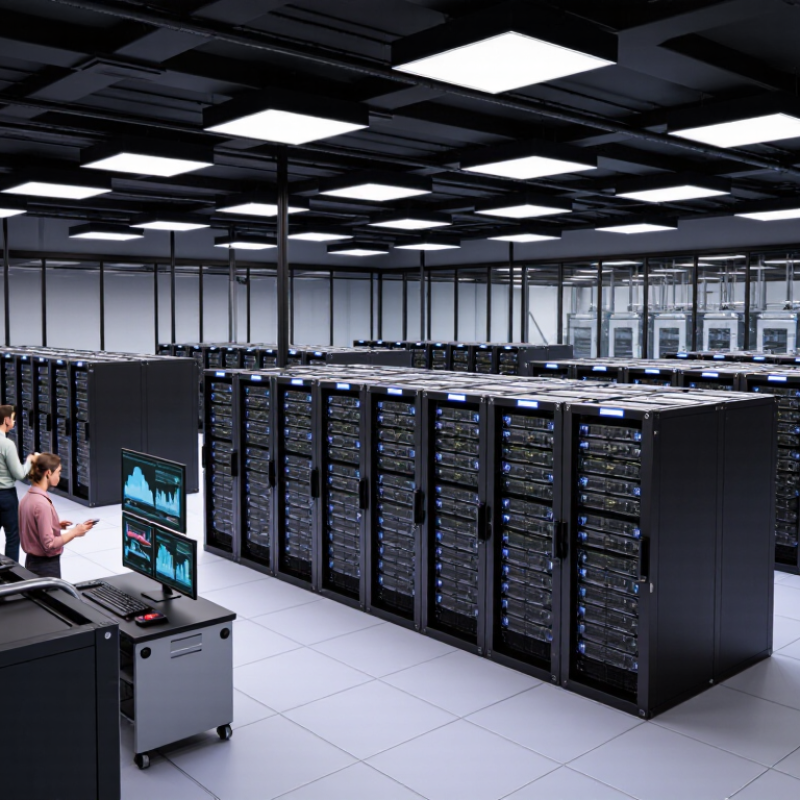
Global AI server manufacturers are companies that design, integrate, and produce computing systems for artificial intelligence workloads. Their products combine processors, accelerators, high-speed memory, storage, networking, firmware, and thermal-control systems. The definition is not perfectly clean. Some manufacturers build complete servers, while others assemble systems from specialized components. In practice, customers judge them by verified performance, reliability, support, and deployment experience.
Their role extends beyond hardware production. They help data centers train large models, serve real-time applications, and manage demanding inference workloads. IDC’s Worldwide AI and Generative AI Spending Guide projects global AI infrastructure investment to exceed 200 billion dollars by 2028. This growth increases pressure on manufacturers to deliver dense systems without creating excessive heat or power costs. A typical deployment may require liquid cooling, redundant power supplies, high-bandwidth links, and strict rack-level testing.
Independent validation matters. The MLPerf Training benchmark offers comparable evidence across selected AI workloads, although benchmark results cannot represent every customer environment. Gartner has also identified AI infrastructure as a major driver of enterprise technology spending, reinforcing the need for scalable systems. Yet performance figures can look better than daily operations. Firmware updates, replacement delays, and cooling failures still affect outcomes. A capable global manufacturer should therefore provide documented testing, regional service coverage, transparent supply information, and measurable lifecycle support. That standard is demanding. It should be.
Why Choose Global AI Server Manufacturers?
Modern AI server design depends on coordinated technologies, not raw processing power alone. Graphics processors and specialized accelerators handle parallel workloads efficiently. High-bandwidth memory keeps large models moving with fewer delays. Fast interconnects then link multiple processors inside one chassis. In practical testing, this connection often matters more than advertised processor speed. Small bottlenecks become expensive at scale.
Thermal engineering is equally important. Dense servers may use advanced air cooling or direct liquid cooling. Sensors track temperature, power draw, fan speed, and workload changes in real time. Redundant power supplies help prevent one failed component from stopping a training job. Remote management tools also support firmware updates and fault diagnosis. They save valuable time. However, cooling systems can increase maintenance demands, and this trade-off is sometimes underestimated.
Modern platforms also require secure virtualization, encrypted data paths, and role-based access controls. These features help separate workloads across research, business, and testing environments. Global manufacturers often design for different electrical standards, operating conditions, and data-center layouts. That broader experience can improve compatibility and long-term support. Still, wider availability does not guarantee better engineering. Buyers should verify measured performance, service response, upgrade paths, and power efficiency. Specifications alone can mislead. A careful evaluation should include real workloads, because synthetic benchmarks rarely reveal every operational weakness.
Why Choose Global AI Server Manufacturers?
How Global Manufacturers Support Diverse AI Workloads
Global AI server manufacturers support more than model training. Their platforms can handle inference, recommendation engines, computer vision, simulation, and large-scale analytics. This flexibility matters because each workload needs different balances between accelerators, memory, storage, and network bandwidth. A vision system may require fast inference near cameras, while training clusters need high-speed interconnects and sustained cooling.
Independent industry data shows why this adaptability is becoming essential. The International Energy Agency reported that data centers consumed about 240 terawatt-hours of electricity in 2022. It also projects demand could exceed 620 terawatt-hours by 2026. Efficient server design is no longer a minor purchasing detail. Manufacturers now use liquid cooling, modular power systems, and workload-aware configurations to control heat and energy use. That matters.
Global production also helps organizations manage regional supply, service, and compliance requirements. Experienced manufacturers can adjust chassis designs, certifications, firmware, and maintenance processes for different markets. The Uptime Institute’s 2024 survey continued to identify human error and infrastructure weaknesses as important outage causes. Strong validation and remote monitoring can reduce those risks, though neither removes them completely.
A practical evaluation should include total operating cost, upgrade paths, spare-part access, and technician expertise. More accelerators do not always mean better performance. Not every workload scales. The trade-off remains. Organizations should test real datasets before deployment, because published benchmark results may not reflect daily production conditions.
| AI Workload | Typical Precision | Recommended Accelerator Configuration | Memory Considerations | Scaling Requirement | Key Server Design Features |
|---|---|---|---|---|---|
| Large Language Model Pre-training | FP16 BF16 FP8 | Multiple high-performance accelerators per node, commonly 4 to 8 devices | High-bandwidth accelerator memory plus large system memory for datasets, checkpoints, and preprocessing | Multi-node scaling with low-latency accelerator-to-accelerator communication | High-wattage power delivery, liquid or advanced air cooling, redundant networking, and fast local storage |
| Generative AI Inference | FP16 BF16 INT8 INT4 | 1 to 8 accelerators depending on model size, latency targets, and concurrent users | Accelerator memory must hold model weights, runtime buffers, and the selected context length | Scale-out across nodes to increase throughput and support high request concurrency | Low-latency networking, efficient cooling, high memory bandwidth, and optimized software integration |
| Computer Vision Training | FP32 FP16 BF16 | 1 to 8 accelerators with parallel data loading and distributed training support | Moderate to high accelerator memory; system RAM depends on image resolution and dataset size | Single-node training is common, while larger datasets may use multi-node distributed training | High-throughput storage, strong data preprocessing capability, and support for multiple image pipelines |
| Recommendation and Ranking Models | FP16 BF16 INT8 | Accelerators or CPUs selected according to embedding size, batch volume, and response-time targets | Large system memory and fast storage are important for embedding tables and feature datasets | Horizontal scale-out is often used to handle large user and item populations | High memory capacity, fast networking, storage redundancy, and predictable low-latency performance |
| Scientific and Engineering Simulation | FP64 FP32 Mixed Precision | GPU or other accelerator nodes optimized for floating-point throughput | Large system memory and high-bandwidth accelerator memory for meshes, matrices, and simulation states | Multi-node high-performance computing with parallel file systems or distributed storage | High-speed fabric, error-correcting memory, stable thermal performance, and strong workload monitoring |
| Speech Recognition and Audio Processing | FP16 BF16 INT8 | 1 to 4 accelerators for model training; CPU or accelerator inference for production services | Moderate accelerator memory with sufficient system RAM for audio buffering and feature extraction | Scale-out based on stream count, language coverage, and real-time response requirements | Low-latency processing, efficient media input, reliable networking, and flexible deployment options |
| Fine-tuning and Retrieval-Augmented Generation | FP16 BF16 INT8 INT4 | 1 to 4 accelerators for parameter-efficient fine-tuning and smaller model adaptation | Memory requirements vary with model parameters, sequence length, batch size, and retrieval index size | Often suitable for a single node, with optional scale-out for larger models and datasets | Fast checkpoint storage, high memory bandwidth, container support, and flexible accelerator selection |
| Edge and Real-Time AI Analytics | FP16 INT8 INT4 | Compact accelerators or embedded inference modules optimized for power efficiency | Lower memory capacity than data-center systems, with sufficient memory for models and streaming data | Distributed deployment across sites, factories, vehicles, or remote facilities | Compact form factors, extended-temperature options, remote management, low power consumption, and network resilience |
Why Choose Global AI Server Manufacturers?
An international AI server provider offers more than hardware access. It provides wider configuration experience across training, inference, and high-performance computing environments. Stanford’s AI Index 2025 reports that machine-learning training compute has doubled roughly every five months since 2010. This pace makes flexible upgrades essential. A global supplier can often source accelerators, memory, networking equipment, and cooling systems through several regional channels. That reduces dependence on one local market. It can also support deployments near users, reducing latency in applications such as medical imaging, robotics, and real-time analytics.
Energy planning matters just as much. The International Energy Agency estimates that data centers consumed about 415 terawatt-hours of electricity in 2024. Global demand may more than double by 2030. Experienced international providers can compare regional power costs, rack densities, cooling designs, and renewable-energy availability. A practical project review should include airflow diagrams, measured power draw, spare-part locations, and replacement times. Small details decide whether a GPU cluster runs smoothly at 30°C or throttles under load.
Global coverage is not automatically better. That assumption needs questioning. Buyers still need to verify data residency, warranty terms, export controls, cybersecurity practices, and local technical support. I have found that attractive specifications can hide weak integration services. The best evaluation combines benchmark results with a pilot rack, documented response times, and transparent total-cost estimates. Sometimes the less impressive proposal is safer, because it explains its limitations clearly.
Comparing global AI server manufacturers requires more than checking processor counts. Start with measured performance. MLCommons benchmark results can reveal training speed, inference latency, and energy use under repeatable workloads. Ask whether the published results match your model size, data type, and network design. A fast rack may disappoint when memory bandwidth becomes the bottleneck.
Energy efficiency deserves equal attention. The International Energy Agency reported that data centers consumed about 460 TWh globally in 2022. It projects demand could exceed 1,000 TWh by 2026. Therefore, compare performance per watt, cooling requirements, power-supply efficiency, and rack density. IDC market research also indicates that AI infrastructure investment is expanding rapidly, but growth alone does not prove engineering quality. Total cost calculations should include electricity, maintenance, software support, and replacement cycles.
Reliability is less visible, yet more practical. Uptime Institute’s annual outage research has repeatedly linked serious incidents with high financial losses, including many exceeding 100,000 dollars. Evaluate component redundancy, firmware control, remote diagnostics, warranty response, and spare-parts availability across regions. Request documented failure rates, not polished claims. Supply-chain transparency also matters, especially for memory, accelerators, and cooling equipment. I would not trust a comparison based on one benchmark or one customer reference. Real workloads are messier. That weakness should remain visible.
It designs, integrates, or produces computing systems for artificial intelligence workloads. These systems combine processors, accelerators, memory, storage, networking, firmware, and cooling. The definition is not perfectly clean.
AI servers can support model training, real-time inference, computer vision, recommendations, simulations, and large-scale analytics. Training needs fast interconnects and sustained cooling. Inference may need low latency near cameras or other data sources.
Dense AI systems create substantial heat and power demand. Liquid cooling, redundant power supplies, and rack-level testing can improve operating stability. Cooling failures still happen.
Use repeatable benchmark results, but test your own models and datasets. Check model size, data type, memory bandwidth, and network design. A fast rack may disappoint when memory becomes the bottleneck.
No. Some workloads do not scale efficiently across additional accelerators. Network limits, memory capacity, software support, or cooling constraints may reduce gains. More hardware is not always better.
Compare performance per watt, power-supply efficiency, cooling needs, and rack density. Electricity can become a major operating cost as deployments expand. The figures vary by measurement scope.
Evaluate component redundancy, remote diagnostics, firmware control, warranty response, and spare-part access. Ask for documented failure rates instead of polished promises. Service delays can affect production.
Regional coverage can shorten repair times and support local certification or maintenance requirements. Supply transparency helps buyers assess memory, accelerator, and cooling availability. Plans can still fail.
Include electricity, maintenance, software support, replacement cycles, upgrades, and technician expertise. A lower purchase price may hide expensive energy or delayed repairs. I would test the full cost carefully.
Global AI server manufacturers design and produce the specialized computing systems that power artificial intelligence applications, from model training and data analysis to real-time inference and enterprise automation. Their products typically combine high-performance processors, accelerator hardware, fast memory, advanced networking, efficient storage, and intelligent thermal management. Modern designs also emphasize scalability, energy efficiency, security, and flexible configurations so organizations can support different workloads without rebuilding their entire infrastructure.
Choosing global ai server manufacturers can provide access to broader engineering expertise, international supply capabilities, consistent quality standards, and support for diverse deployment environments. When comparing providers, organizations should evaluate processing performance, accelerator compatibility, system scalability, reliability, energy consumption, security features, customization options, warranty coverage, technical support, and total cost of ownership. A careful assessment helps businesses select an international partner whose solutions can adapt to changing AI requirements while delivering stable, efficient, and long-term value.
